
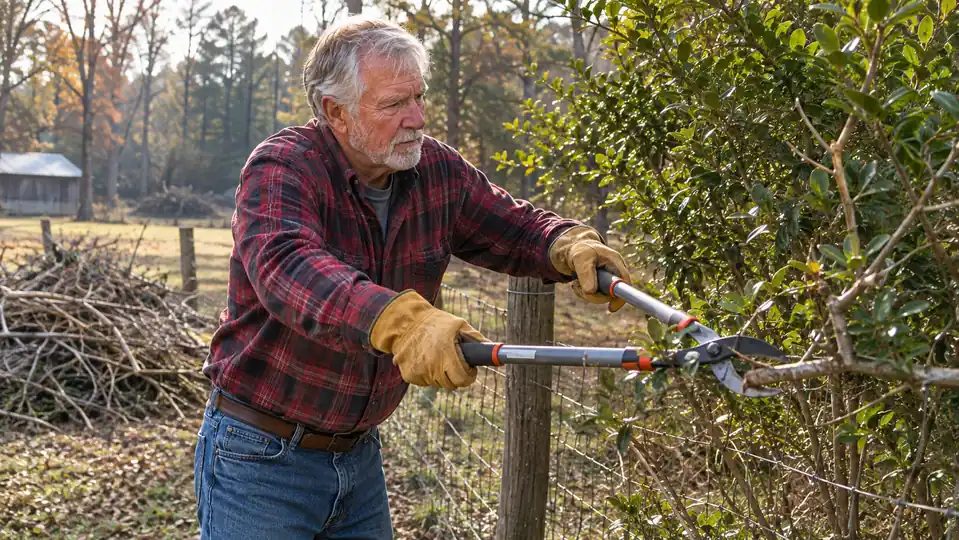
I bought my 22 acres outside Crossville in 2019. About six of them were buried in privet, blackberry bramble, sweetgum saplings, and old cedar along a fence line that had collapsed years before I got there. I have been clearing it in sections ever since, mostly by myself, usually on weekends.
In three seasons of that work, I have gone through a pair of cheap loppers and more batteries than I care to count. The Fiskars PowerGear2 is the one tool that has stayed in the truck the whole time. It is not the glamour tool in a clearing kit, but it is the one I reach for first, and here are the ten reasons why.
The loppers I reach for first on my own clearing jobs
Three seasons of privet, sweetgum, and cedar on my place, and this is the pair that stayed in the truck. If you clear your own ground, start here.
Amazon Check Today's Price on Amazon →It takes down 2-inch saplings in one squeeze
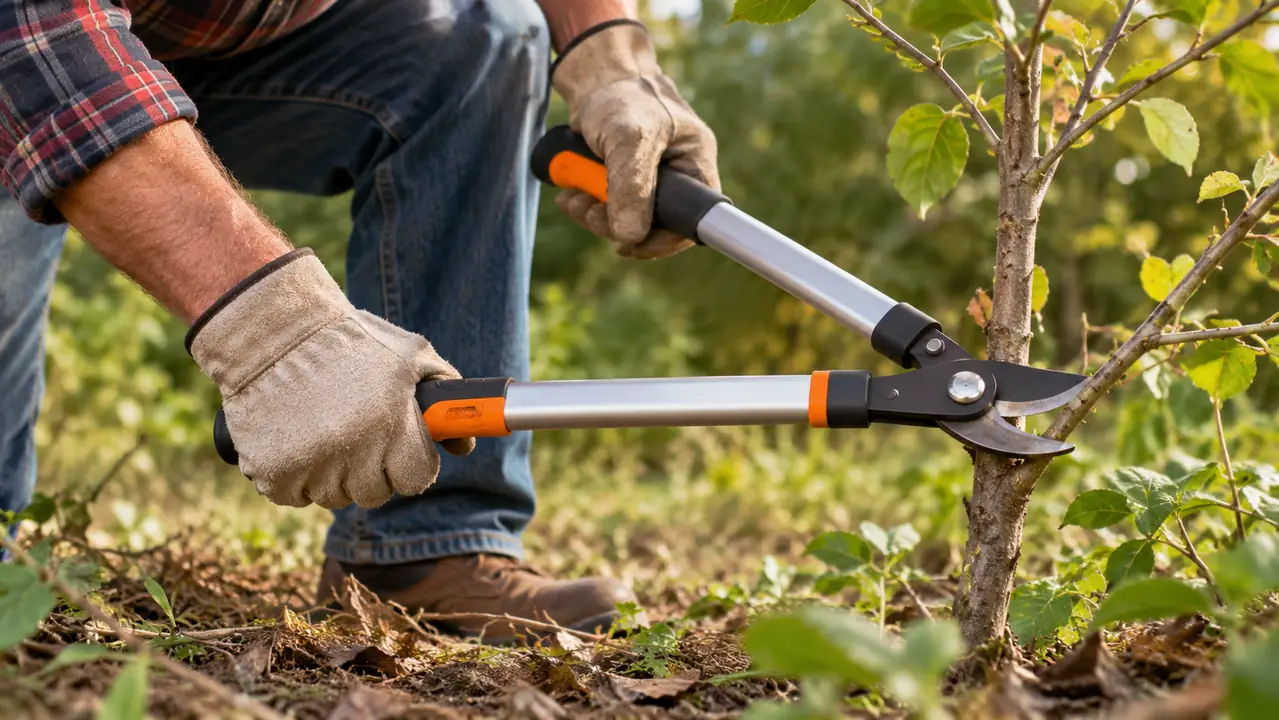
The cut capacity is the number that matters most to me: 2 inches. On my place that covers nearly every sweetgum and privet stem that has taken over the old fence line. I close the handles on a sapling that size and it goes in one pass. No sawing back and forth, no wrestling the branch, no breaking out the chainsaw for something this small.
The bypass blade cuts clean instead of crushing
A bypass blade works like a pair of scissors. The sharp blade passes the hook and slices the wood clean. That is the right cut for live growth like privet and young trees, because it does not crush the stem. An anvil lopper tends to mash green wood, which makes a mess and a slower heal. For clearing live brush, bypass is the right call.
The serrated edge grips instead of sliding off
The blade edge is serrated, which sounds like a small detail until you are cutting a wet branch or one growing at an awkward angle. The teeth bite into the wood and hold the cut where you started it. I have had fewer slips with this pair than with any straight-edge lopper I have owned, and fewer slips means fewer nicked knuckles.
The low-friction coating shrugs off sap
Privet and cedar are sticky, especially in Tennessee summer heat. A plain steel blade gums up fast and starts dragging halfway through a session. The low-friction coating on this blade keeps it cutting smooth, and it does not collect sap the way my old pair did. On a long morning of clearing, that is the difference between stopping for lunch with a clean blade and stopping to scrape gum off every ten minutes. I spend less time wiping the blade and more time cutting.
The SoftGrip handles do not punish your hands
The handles are rounded with a SoftGrip surface, and that is the difference between an afternoon of cutting and an afternoon of misery. After a full day on the fence line, my hands are not blistered and my palms are not sore. When you clear ground by yourself, your hands are the machine, and this tool treats them right.
At 3.9 pounds, it works overhead without wearing you out
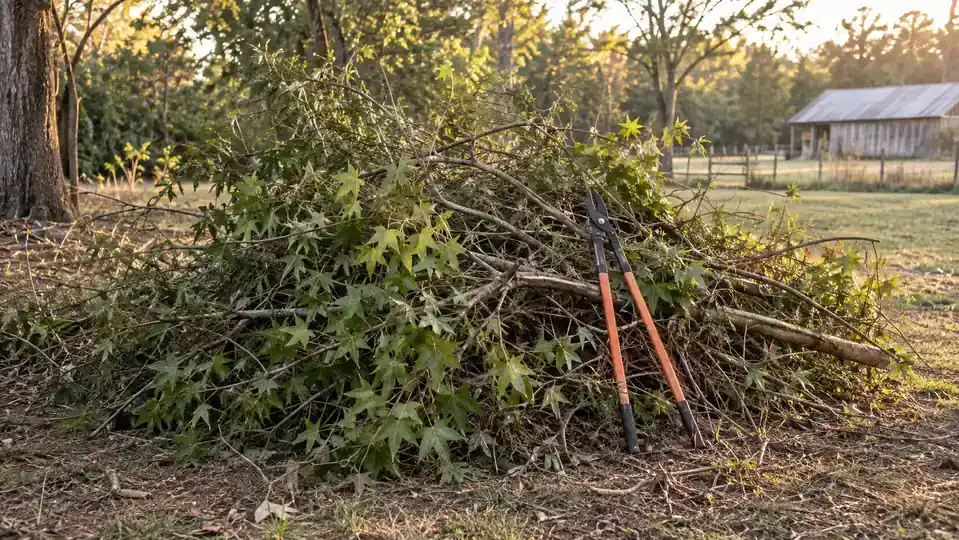
A lot of my clearing is reaching up into cedar limbs and cutting overhead. At 3.9 pounds, these loppers are light enough to work above your head for a stretch without your arms giving out. The weight does not fight you at full extension, which is where most loppers start to feel heavy. My old pair of steel loppers felt like a sledgehammer after ten minutes up high. This one I can carry all afternoon.
32 inches of reach keeps you out of the briars
The 32-inch size means I can stand back from the blackberry brambles and still reach the base of the cane to cut it. That reach also keeps me off the ladder for most low branches, which matters when you are working alone on uneven ground. The longer the handle, the farther you stay from the thorns and the poison ivy.
It works in either hand
The design is ambidextrous, so it does not care which hand leads. I switch hands when one gets tired, and Carol can pick it up and use it the same way I do. That sounds minor until you have used a tool that only works right-handed. On a long clearing day, being able to switch hands is a real advantage.
The full lifetime warranty means you buy it once
Fiskars backs these loppers with a full lifetime warranty. I have broken cheap loppers in a single season, usually at the hinge or the handle. This pair is built to be the last one you buy, and the warranty is the reason I trust that. That matters on a property like mine, where the clearing work never really ends. Buy it once, use it for the rest of your clearing years.
It is the first tool I grab on every clearing session
Here is the honest one. The chainsaw gets the big cedar, the tractor gets the heavy pulling, and the Fiskars PowerGear2 gets everything in between. It is the tool that gets used every single time I go out, which is more than I can say for anything else in my kit. If you clear your own ground, it earns its spot in the truck.
What I'd Skip
Now the honest part, because no tool is everything. Do not buy these thinking they replace a chainsaw or a brush cutter. Two inches is the ceiling. Anything thicker, especially dead cedar or oak, is a saw job, and I say that as a man who has tried to make a lopper do more than it should. If you are clearing acres of dense saplings, a tractor or a rented brush cutter will do in an afternoon what these do in a week. And if you have serious arthritis or grip trouble, the PowerGear2 design helps, but a powered pruner is the kinder tool. I keep a folding saw in the truck for anything these cannot handle, and that combination has covered every job on my place so far. These are for the daily cutting: the fence line, the overgrown corner, the branch over the driveway. That is where they shine, and that is the honest limit.
Chainsaw for the big cedar, tractor for the heavy pulling, and the Fiskars PowerGear2 for everything in between.
The Bottom Line
If you are clearing your own ground, you need three things: a chainsaw for the big stuff, something with a motor for the heavy stuff, and a good pair of loppers for everything else. The Fiskars PowerGear2 is the pair I would buy again tomorrow. It is not the cheapest lopper on the shelf, and it is not magic. It is simply the tool that does the daily work without fighting you, and after three seasons on my place, that is worth a lot. I do not get paid to say that. It is just what three seasons of my own fence line taught me.
The loppers that stayed in my truck for three seasons
I have cut privet, sweetgum, and cedar with the Fiskars PowerGear2 on my own 22 acres. If you are clearing your own ground, this is the pair I would buy again.
Amazon Check Today's Price on Amazon →