
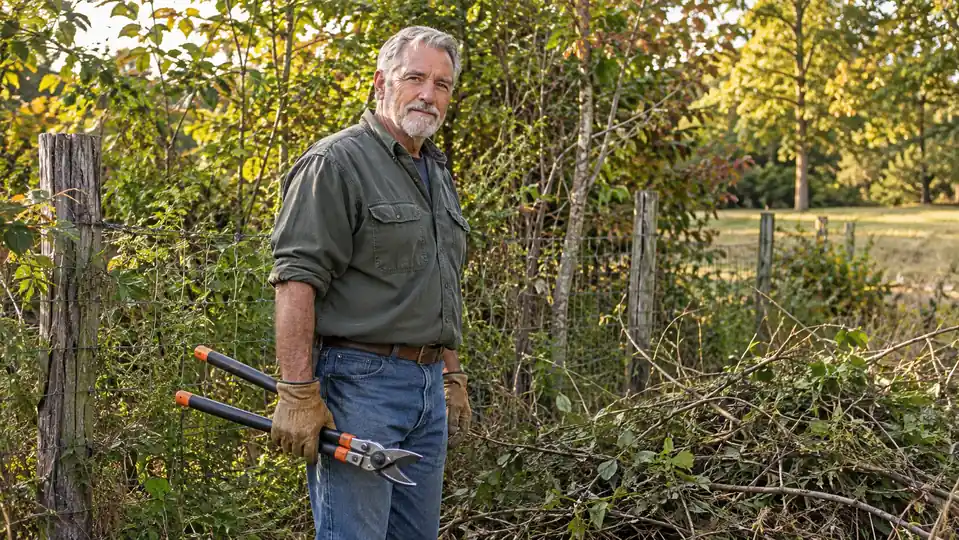
If you are clearing privet, sweetgum saplings and blackberry bramble on your own ground, the Fiskars PowerGear2 loppers are the tool I reach for first. I have spent three seasons working the overgrown fenceline behind my barn, and these bypass loppers handle the green growth that makes up most of that work. Anvil loppers have their place, but for this job, the Fiskars come out ahead. I am not saying the anvil style is useless. I am saying that for the kind of cutting that makes up a land-clearing project, the bypass blade is the better design.
I am Dale Kittredge, retired county road-crew foreman, and I have been clearing 22 acres outside Crossville, Tennessee since I bought the place in 2019. About six of those acres were so thick with privet and sweetgum you could not walk through them. This comparison is based on what actually worked on that ground, not on a spec sheet. I have owned both styles, and I have cut enough brush to know which one I would buy again. The short answer is the Fiskars PowerGear2, but the honest answer is that it depends on what you are cutting.
| Fiskars PowerGear2 | Anvil Loppers | |
|---|---|---|
| Live green growth | Bypass blade slices through 2-inch saplings without crushing the stem | Anvil blade tends to mash green wood before it cuts |
| Dead, dry wood | Bypass edge can bind on brittle stubs | Anvil blade is built to crush and split dead branches |
| Weight | 3.9 pounds, easy to carry all afternoon | Often heavier, especially with steel handles |
| Handle comfort | Rounded ergonomic handles with SoftGrip | Usually plain wood or metal grips |
| Warranty | Full lifetime warranty | Varies; many basic models carry a one-year warranty |
| Cost | Costs more at the register | Usually the cheaper option |
| Best for | Clearing privet, bramble and saplings on a fenceline | Snapping off dead limbs and dry stubs |
How I Tested These Loppers
I did not set up a lab test. I took both pairs out to the worst section of my property, the old fence line where the privet had grown into a solid wall. The ground was uneven, the brambles were thick, and the sweetgum saplings were anywhere from finger-thick to a good two inches across. That is the kind of work these tools are supposed to do, so that is where I tested them. I wanted to see which one would get the job done without wearing me out.
I used the Fiskars PowerGear2 for a full afternoon, cutting at ground level and reaching up to take out overhead branches. The 32-inch length gave me good reach, and the 3.9-pound weight meant I could carry it from one thicket to the next without dragging. I cut privet trunks, sweetgum saplings, and a few old cedar stubs that were dead and dry. The bypass blade went through the green wood cleanly, and the low-friction coating kept the sap from building up on the blade. That first afternoon was late March of 2023, and the privet along the old fence line was a solid wall about head-high. I started at the north end and worked south, cutting each trunk at ground level in one squeeze. The biggest sweetgum I hit that day measured a shade under two inches at the base, and the Fiskars took it in a single cut. I counted forty-one cuts before I stopped to rest, and my hands still felt fine.
Then I did the same stretch with a pair of anvil loppers I have owned for years. I do not name the brand because the point is not to pick on one company. The point is the difference in cutting action. On the same green saplings, the anvil blade crushed the wood before it cut, and I had to wiggle the handles to finish the cut. My hands were sore by the end of the afternoon. That is the difference that matters when you are clearing a fenceline, not a single branch.
I also tested both on a wet morning, because that is when you actually clear brush in Tennessee. The low-friction coating on the Fiskars blade shed the water and sap without sticking. The anvil blade picked up a film of wet sap that made the cut feel sticky. It is a small thing, but it adds up over a long day.
Where Fiskars Wins
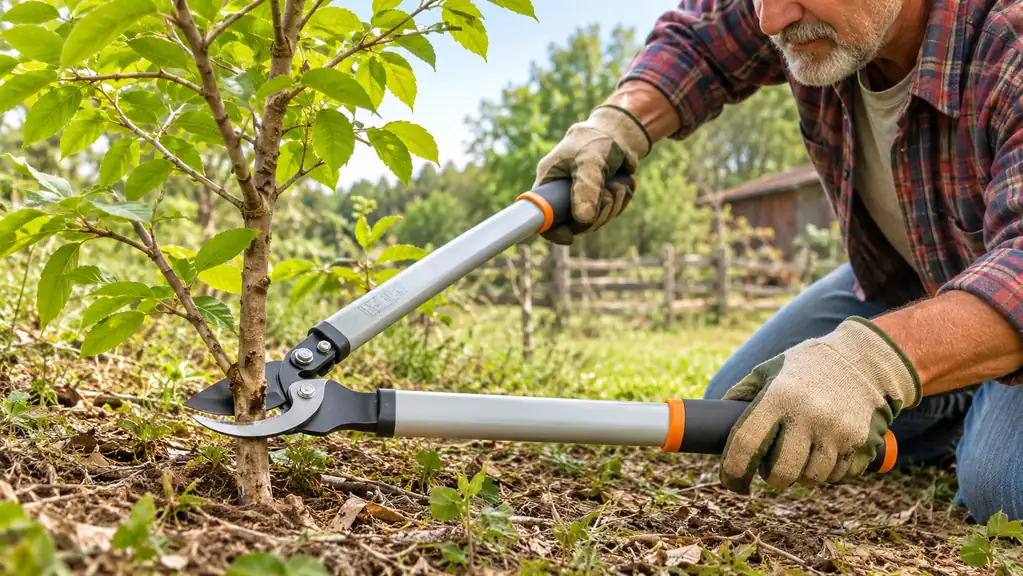
The first thing you notice is the bypass blade. Instead of crushing the branch against a flat anvil, it slides past a fixed blade the way scissors do. On green privet and sweetgum saplings, that means a clean cut that does not leave a shredded stub. The fully hardened alloy steel blade holds an edge through a full afternoon of cutting, and the low-friction coating keeps sap from gumming things up. A clean cut also heals better on the plant, which matters if you are trimming things you intend to keep. I checked the cuts on the privet I trimmed back near the barn, and the face was smooth, not frayed. A smooth face sheds water and closes over faster, so the plant does not send up a half-dozen new shoots from a torn stub. That matters when you are trying to reclaim a fence line instead of just chopping it back for the season.
The second win is weight and comfort. At 3.9 pounds, these loppers are light enough to carry in one hand while you pull vines with the other. The rounded ergonomic handles with SoftGrip are easy on the palms, which matters when you are cutting for two or three hours straight. The aluminum handles do not get cold the way steel does on a chilly morning, and they do not add weight you do not need. I have used heavier loppers that wore me out in an hour.
The warranty is the third win. Fiskars backs these with a full lifetime warranty. I have broken cheaper loppers at the pivot point after a season of hard use, and I have never had to send these back. Knowing the company stands behind the tool makes it easier to put it to work. It also tells you something about how the tool is built. A company does not offer a lifetime warranty on a tool it expects to fail.
Where Anvil Loppers Win
I will not pretend anvil loppers are useless. For dead, dry wood, they have an edge. The flat anvil gives the blade something to push against, so it can crush through a brittle stub that would make a bypass blade bind. If most of your cutting is dead cedar and old fence posts, an anvil lopper will get the job done with less fuss. I have used anvil loppers for years, and they have a place in any barn.
They also tend to cost less at the register. If you are on a tight budget and only need to snip the occasional dry limb, a basic anvil lopper is a reasonable buy. Just know that on live green growth, you will feel the difference. The crush-and-tug action is harder on your hands and leaves a rougher cut that can invite disease into the plant. That is a real tradeoff, and it is not always obvious when you are standing in the store.
There is one more place anvil loppers win, and it is worth being honest about. When you are cutting a branch that is already dead and brittle, the anvil design lets you put your weight behind the cut without worrying about the blade sliding off. That is a real advantage for a specific job, and it is the reason I keep an anvil pair in the barn for winter cleanup. If I only cut dead wood, I would probably use anvil loppers as my main pair. Last January I took the anvil pair out to snap the dead lower branches off a row of old cedars, and it went faster than the bypass pair would have. The dead wood is so brittle that a bypass blade can catch and bind halfway through, and then you are stuck tugging the handles. The anvil just crushes the dry fiber and moves on. For that one job, I would not trade it.
If you are cutting live saplings, this is the one.
The Fiskars PowerGear2 slices through 2-inch green wood without the crush-and-tug of an anvil. It is the tool I grab first on my own fenceline.
Amazon Check Today's Price on Amazon →
Who Should Buy Which
Buy the Fiskars PowerGear2 if your work is mostly live green growth: privet, sweetgum saplings, blackberry bramble, young cedar. That is the kind of cutting that makes up most of a land-clearing project, and the bypass blade makes it faster and easier on your hands. The 2-inch cut capacity covers the vast majority of what you will meet on an overgrown fenceline. It is the tool I keep on the truck.
Buy anvil loppers if you only cut dead, dry wood and you want to save money. They are a fine tool for that narrow job. But if you are like me and you are clearing a mixed fenceline, the Fiskars is the better all-around choice. It does the live growth cleanly and still handles the occasional dry stub well enough to get by. You will not need to switch tools every time you come across a different kind of branch.
One more thing to consider is how much you will use them. If this is a once-a-year tool for a single branch, either style will do. If you are clearing acreage, the difference in hand fatigue is real. After a full day, I would rather have the lighter, cleaner-cutting bypass loppers in my hands. The anvil pair stays in the barn for the winter cleanup, and the Fiskars rides in the truck all season. A neighbour down the road borrowed the Fiskars for an afternoon to clear the saplings along his driveway, and he ordered his own pair the next week. He is not a tool guy, and he noticed the difference without being told. That is about as honest a recommendation as I can offer.
The bypass blade went through the same saplings with one clean squeeze. That is the whole difference.
What to Look For in a Lopper
When you are shopping for loppers, the first decision is bypass versus anvil. Bypass blades work like scissors, with a sharp blade sliding past a fixed one. They are the better choice for live, green growth because they make a clean cut. Anvil blades crush the branch against a flat surface, which works well on dead wood but can mash green stems. The Fiskars PowerGear2 is a bypass design, and that is the right call for most land-clearing work.
The next thing to look at is weight and handle comfort. A heavy lopper will wear you out long before the blades get dull. The Fiskars comes in at 3.9 pounds, which is light enough for a full afternoon of cutting. The rounded ergonomic handles with SoftGrip are easy on the hands, and the aluminum handles keep the weight down. If you can, pick the tool up and squeeze the handles a few times before you buy.
Finally, check the warranty. A full lifetime warranty, like the one Fiskars offers, tells you the company expects the tool to last. Cheaper loppers often come with a one-year warranty, which is a sign they are not built for years of hard use. The blade material matters too. The PowerGear2 uses fully hardened alloy steel with a low-friction coating, so it stays sharp and does not gum up with sap. Those details make the difference between a tool you use and a tool you fight.
The Bottom Line
After three seasons on my own property, the Fiskars PowerGear2 is the lopper I keep on the truck. It is not the tool for every job. Dead, dry wood is better handled by an anvil design, and anything over 2 inches is a saw job. But for the green growth that makes up most of a fenceline cleanup, the bypass blade is faster, cleaner and easier on your hands. That is not a marketing claim. That is what I found cutting my own ground.
If you are standing in the aisle trying to decide, ask yourself what you will be cutting. If the answer is live saplings and privet, get the Fiskars. If it is dead stubs, get an anvil pair. For my money, and for the work I do every year, the Fiskars PowerGear2 is the better tool for clearing land. It is the one I would buy again, and the one I recommend to neighbours who ask.
Ready to clear that fenceline?
The Fiskars PowerGear2 is the tool I keep on the truck for green saplings and privet. See today's price on Amazon and read the long-term review for more.
Amazon Check Today's Price on Amazon →