
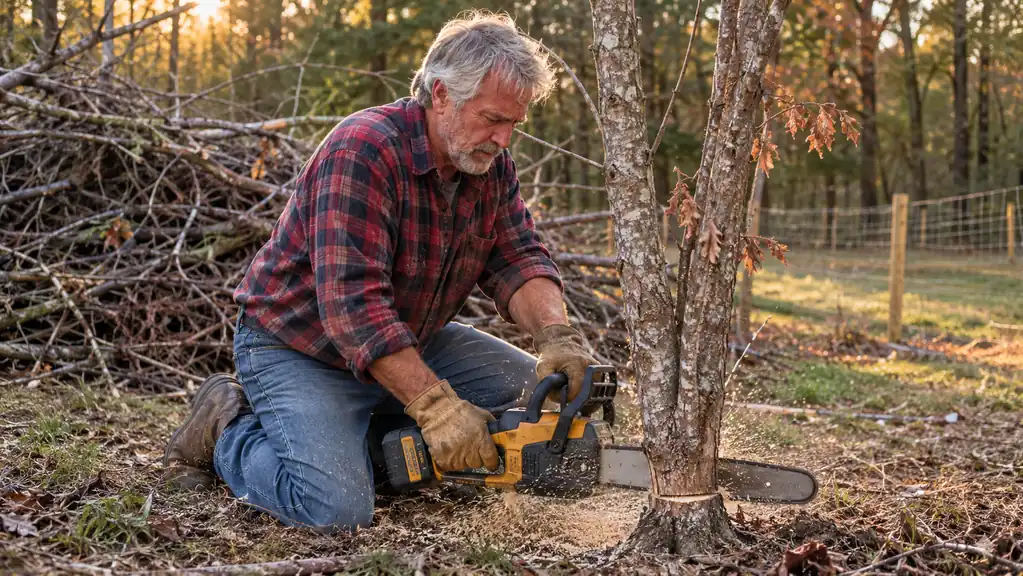
The first thing you learn clearing six overgrown acres is that the best chainsaw is the one you actually carry to the brush pile. I bought the Greenworks 40V 16-inch brushless chainsaw in the spring of 2023, mostly to test whether a battery saw could keep up with the privet, blackberry bramble, sweetgum saplings and old cedar along a fence line that had collapsed sometime in the previous decade. Two seasons later, it is the saw that rides in the truck bed, and the gas saw stays in the shed unless I am cutting something big enough to need it.
Before I get into the details, here is the short version. This is not a logging saw, and it is not going to replace a 60cc gas saw for standing timber. But for the work most acreage owners actually do, cutting saplings, trimming limbs, clearing blowdowns, bucking firewood up to a foot or so, it has started on the first squeeze every time for two years. The battery still holds a charge after sitting on the shelf all winter, and I have never once wished I had brought the gas saw instead.
The Quick Verdict
For brush, saplings and limb work on a 20-plus-acre place, the Greenworks 40V is the saw I grab first. It starts every time, cuts all afternoon on a charge, and asks almost nothing of you in return.
Amazon Check Today's Price →The saw that earns its spot in the truck
Two years in, the Greenworks 40V is the first saw I load when the clearing list gets long. If your place looks anything like mine, it is worth a look at today's price.
Amazon Check Today's Price on Amazon →How I've Used It
We bought the 22 acres in 2019, and about six of them were a wall of privet, blackberry bramble, sweetgum saplings and old cedar. I have been clearing it in sections ever since, usually a couple of hours at a time on weekends. That is the work this saw has done: cutting privet stems at the base, slicing saplings into manageable lengths, trimming branches off the cedars I kept, and bucking the occasional blowdown into stove lengths.
The saw weighs 10.4 pounds with the battery in, which matters more than you think when you are bending over bramble all afternoon. The 16-inch bar handles the saplings and limb wood I cut most, and the 1.5kW brushless motor has never bogged down on anything I have pointed it at in that size range. The listing says it handles trees and limbs up to 28 inches in diameter. I have cut plenty in the 10 to 14 inch range without complaint. I would call that 28-inch figure optimistic for a homeowner saw, and I would rather be honest about it than have you find out in the field.
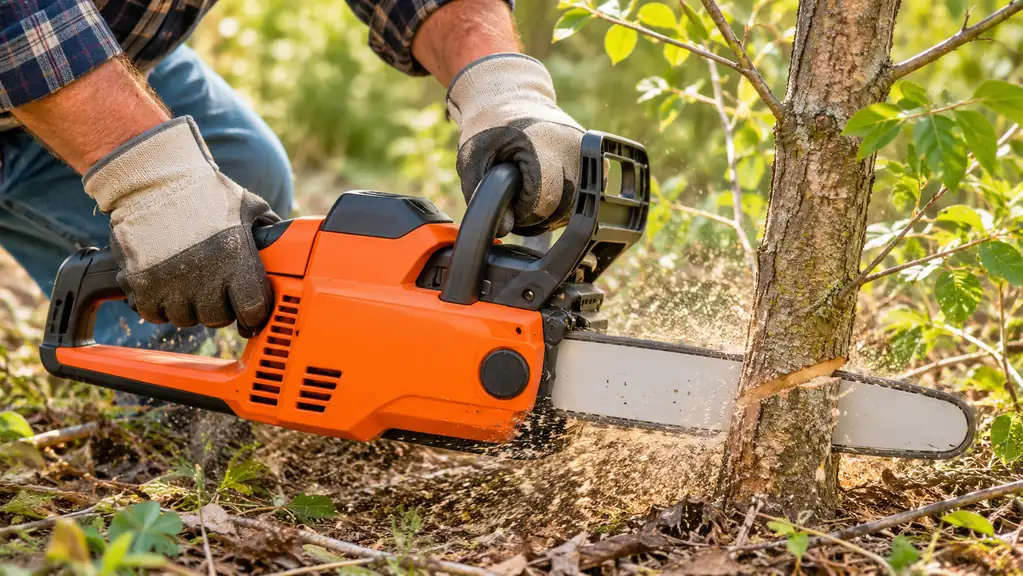
The 2-step start is the part I did not expect to matter as much as it does. There is no choke, no primer bulb, no pull cord, no fuel mix. Squeeze the trigger and you are cutting. When you are stopping and starting a dozen times to drag brush out of the way, that adds up fast. The chain brake sits right where my left hand expects it, and the low-kickback design means I have never had a scare with it, even cutting through knotty cedar where I was half expecting one.
The work pattern matters too. I am not cutting for eight hours straight. I am cutting for two hours, then dragging brush, then cutting more. That stop-and-start rhythm is where a battery saw shines and where a gas saw punishes you. Every time the gas saw sits for twenty minutes, it wants a few pulls to get going again. The Greenworks is simply ready when I am.
What Two Years of Cutting Taught Me
The honest headline is that the Greenworks has been more reliable than any gas saw I have owned, and I ran a county road crew long enough to have owned a few. The electric motor starts instantly in any weather. Cold mornings, humid afternoons, it does not care. The gas saw in the shed needs a moment of attention every time, and on a 90-degree Tennessee afternoon, that moment is enough to make you put the job off until the weather breaks. That may sound like a small thing, but on a place your own size, the saw you can start is the saw you use, and the saw you use is the saw that gets the work done.
The other thing two years taught me is that the automatic oiler earns its keep. I have run saws where you top up the bar oil by hand and saws where the oiler does it for you. This one does it for you, and the chain stays slick through a long afternoon of cutting. I still check the bar oil before every session, because that is just how you treat a saw, but I have not had a chain come off or a bar overheat once.
Cutting speed is where the battery saw loses to gas, and I am not going to pretend otherwise. In the 10 to 14 inch range, the Greenworks cuts with confidence but not with the urgency of a gas saw. It is a steady, patient cut, and you learn to let the saw do the work instead of leaning on it. For the saplings and brush that make up most of my clearing, the difference is seconds per cut, and the lack of vibration and noise makes up for it before the afternoon is over.
The fence line is mostly clear now, which is the real measure of a saw. A tool that is a chore to use gets left in the shed, and a job that should take a season takes three. The Greenworks got used because it was easy to use, and the work got done because the saw got carried to the brush pile. That is the whole argument for a battery saw in one sentence.
Battery Life and the 12-Month Hold
The 40V 4.0Ah battery is the heart of this thing, and it is the part I was most skeptical about. I have used battery tools long enough to expect the charge to fade after a year or two of hard use. Two seasons in, this battery still runs a full afternoon of cutting saplings and limb wood. I have never actually drained it in a single session. I run out of daylight before I run out of charge, and that has been true since the first month.
The spec that surprised me is the charge retention. Greenworks says the battery holds its charge for 12-plus months, and I have seen it with my own eyes. I hung the saw in the shed in November, left the battery on the shelf, and in March it still showed a full charge and started the saw on the first squeeze. That alone is worth something, because a gas saw that sits for four months is a gas saw that needs a carburetor cleaning before you can trust it again.
The included charger brings the battery back in a reasonable evening. I usually charge it the night before I plan to cut, and I have never been waiting on it. If you are clearing heavy timber all day, every day, you would want a second battery, and Greenworks sells those separately. For weekend clearing on a place my size, one battery has been plenty.
Cold weather is worth a mention. I have cut in the high 20s and the battery does not seem to care. It is not as lively as it is in July, but it has never quit on me, and it has never needed a warm-up lap the way a gas saw does on a frosty morning.
The Bar, the Chain, and the Automatic Oiler
The 16-inch bar and chain are the right size for this class of saw. Long enough to reach into a brush pile without bending over, short enough to keep the saw light and maneuverable. The low-kickback chain is the kind of thing you do not appreciate until you need it, and the chain brake has stayed firm and positive every time I have tested it.
Maintenance has been simple. I keep the chain tensioned, I keep the bar oil topped up, and I sharpen the chain when it starts to cut slow. That is the whole list. No spark plug, no air filter, no fuel lines, no carburetor. The included components are the saw, the battery, the charger and the manual, and the manual is worth reading because it shows you the right way to tension the chain and check the brake before you ever pull the trigger.
The 3-year warranty covers the saw, and that is a real answer when somebody asks me whether to trust a battery saw from a brand they have not run before. Greenworks has been making these long enough that the warranty feels like confidence rather than a marketing line. Two years in, I have not needed to use it, which is exactly what I want from a warranty.
Where a Gas Saw Still Wins
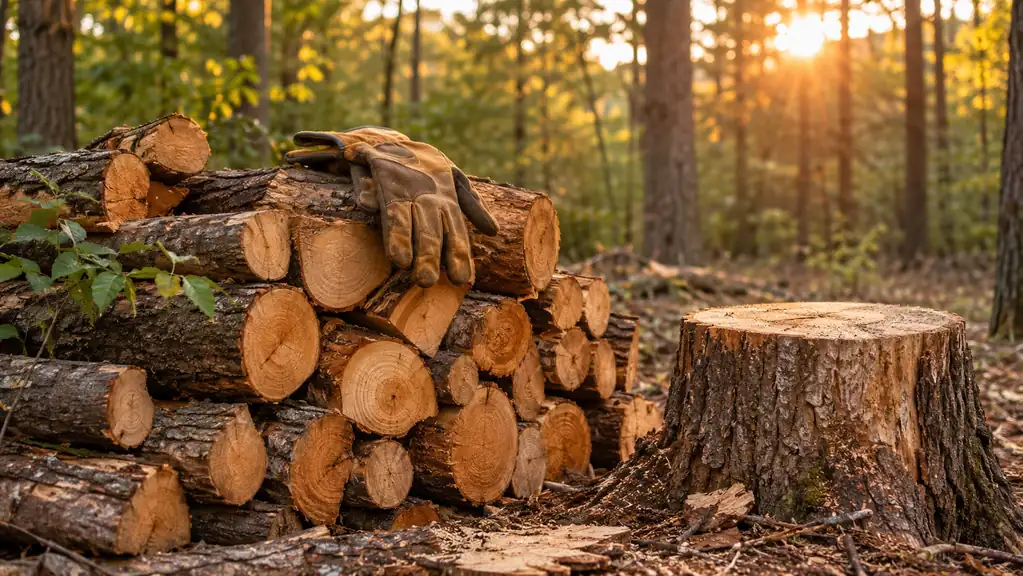
I want to be straight with you about the limits, because every review that pretends a battery saw is a gas saw in a different body is doing you a disservice. If you are felling large standing timber, cutting oak rounds bigger than the bar, or working a full day at a commercial pace, you want a gas saw. The Greenworks is a homeowner tool, and it knows it. Nothing about that is an insult.
The other honest limitation is cutting speed on bigger wood. In the 16 to 20 inch range, the saw cuts, but it takes its time, and you can feel the motor working. I have bucked blowdowns that size with it, but I have also reached for the gas saw when I had a dozen of them lined up. The battery saw is the right tool for the work that makes up 90 percent of my clearing, and the gas saw is the right tool for the other 10 percent. Knowing which is which saves you money and frustration.
The last difference is noise. The Greenworks is quieter than any gas saw I have run, and that matters more than I expected. I can hear my wife call from the porch, and I can hear a branch cracking overhead before it comes down. When you are working around the place with family nearby, that is a safety feature that does not show up on the spec sheet.
What I Liked
- Starts on the first squeeze every time, no pull cord, no choke, no fuel mix
- Automatic oiler keeps the chain slick through a full afternoon of cutting
- Battery holds its charge for months on the shelf, so the saw is ready when you are
- 10.4 pounds with the battery, easy to carry through brush and bramble
- 3-year warranty and simple maintenance, no carburetor or spark plug to fuss with
Where It Falls Short
- Slower cutting than a gas saw on wood over 14 inches or so
- The 28-inch diameter claim in the listing is optimistic for a homeowner saw
- One battery means planning a charge the night before if you cut all day
- Not the tool for felling big timber or working at a commercial pace
Two seasons in, the Greenworks has started on the first squeeze every single time. I cannot say that about any gas saw I have owned, and I have owned a few.
Who This Is For
If you are clearing saplings, privet, bramble and limb wood on a place your own size, and you would rather spend Saturday cutting than fighting a pull cord, this saw is for you. It is also for the person who has let a gas saw sit in the shed because starting it felt like a project. The Greenworks removes that barrier completely. If you are over 45 and your shoulders have opinions about pull cords, the 2-step start is worth the price of admission on its own. I have watched neighbors my age trade down from bigger gas saws for exactly this reason. The tool they reach for is the one that does not ask anything of them first.
Who Should Skip It
If you are felling large timber, cutting firewood at a serious pace, or working commercially, buy a gas saw and do not look back. The Greenworks is honest about being a homeowner tool. It is also not for you if you refuse to maintain a chain, because a dull chain will make any saw, battery or gas, feel useless. If the big timber is a once-a-year job, rent a gas saw for the weekend instead of buying one you will fight the other fifty weekends. And if you need to cut all day without stopping, budget for a second battery before you buy, or you will be waiting on a charge at the worst possible moment.
If your clearing list looks like mine
Saplings, brush, limbs, fence lines. The Greenworks 40V has covered all of it for two seasons without a single no-start. Worth a look at today's price.
Amazon Check Today's Price on Amazon →