
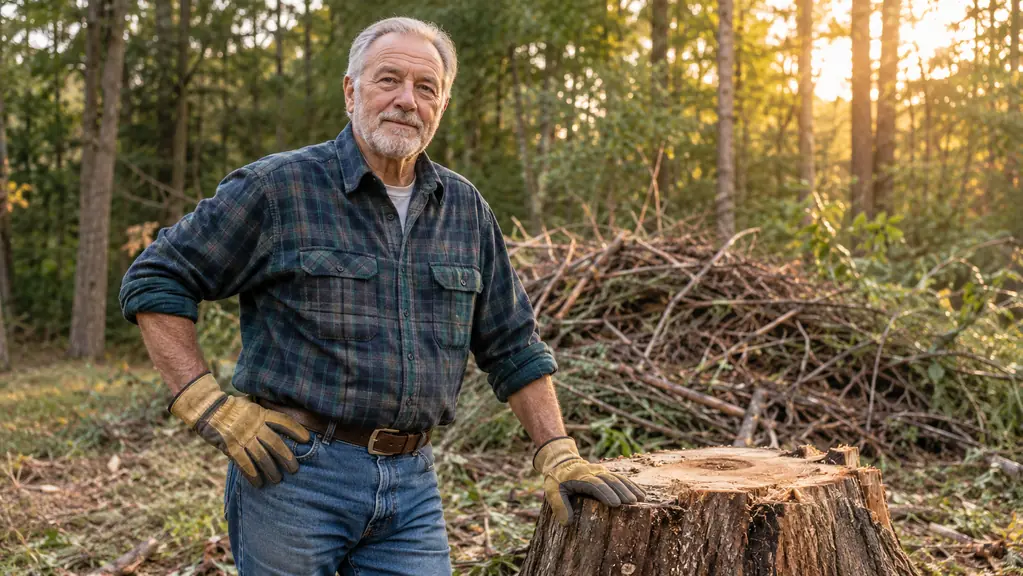
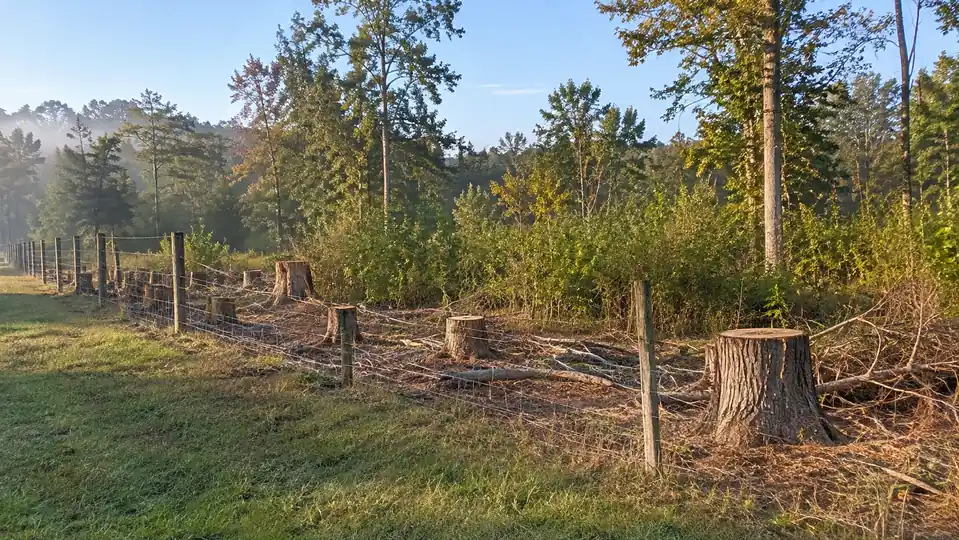
When you buy 22 acres of Tennessee woods, you inherit somebody else's idea of a fence line. Mine came with about six acres of privet, blackberry bramble, sweetgum saplings and old cedar all tangled up where a fence used to stand. I've been working through it in sections since 2019, and the part that wore me out wasn't the cutting. It was the coming back. Cut a sweetgum down in the spring and by August it's throwing up a ring of shoots like nothing ever happened. That's what finally drove me to Bonide Stump-Out.
I'm a retired county road-crew foreman, so I've spent a working life fighting brush from the seat of a county mower. I've also learned that a homeowner has to pick his battles. For the last two seasons, Bonide Stump-Out has been the thing I reach for when I want a stump to stay dead. This is how I actually used it on my place, what it did, and where I'd tell you to save your money.
The Quick Verdict
A dependable stump and brush killer that does what the label says, provided you do the cutting and the waiting. Not a one-step fix, but the most reliable way I've found to keep a cut stump from coming back.
Amazon Check Today's Price →Tired of cutting the same saplings twice?
Bonide Stump-Out kills the stump and stops the sprouts, so the clearing you do this year stays cleared. It's the step I stopped skipping. Check today's price on Amazon.
Amazon Check Today's Price on Amazon →How I've Used It
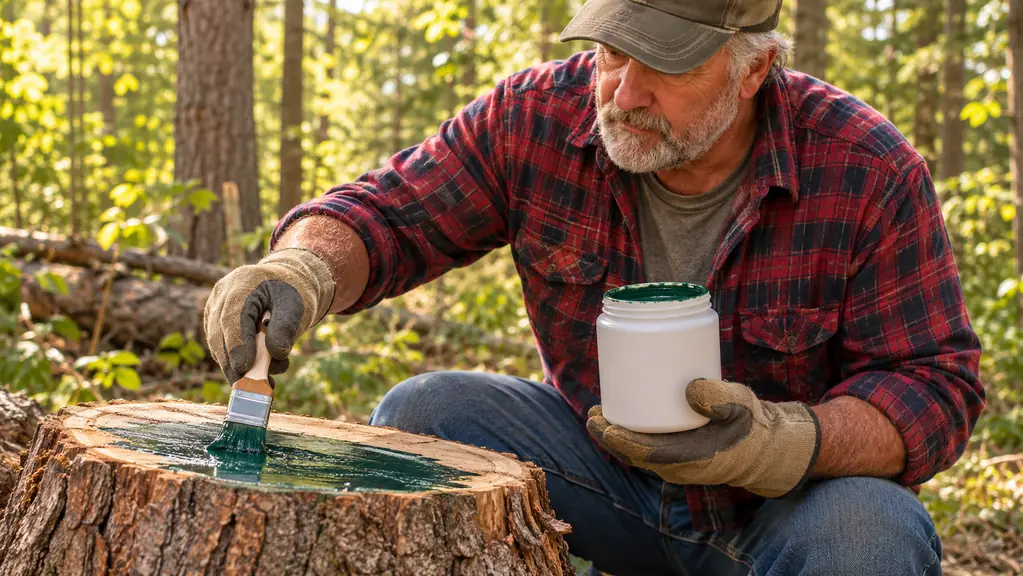
My routine is simple. I cut the tree or sapling as low to the ground as I can, then I put Bonide Stump-Out on the fresh cut the same day. The bottle is 8 fluid ounces with an applicator, so you're not drenching the ground. You're putting the concentrate right on the cut surface where it can do its work. For stumps, the label says to use it undiluted, and that's what I did.
For the privet thickets and blackberry bramble, I went at them differently. Some of those patches were too dense to cut first, so I used Bonide Stump-Out as a foliar spray with a tank sprayer, following the label's mixing directions. The label says it works on woody plants, vines and broadleaf weeds, and it's made for outdoor use around homes, cabins, fences and walkways. That covers just about everything I was fighting.
Timing turned out to matter more than I expected. I got my best results on fresh cuts made in late summer and early fall. A stump I treated in September stayed dead the next spring. A couple I cut in June and treated the same way came back weaker, but they still came back. So I learned to save the Bonide for the late-season work and use the summer for cutting and piling. I kept a rough tally that first season, and of the stumps I treated, just about all stayed quiet through the next growing season. The ones I treated twice, because I'd missed part of the root system, stayed quiet after that. It's slow work, but it's done once instead of every summer.
What Bonide Stump-Out Is (and Isn't)
The active ingredient is 3,5,6-Tricloro-2-Pyridinyloxyacetic Acid, which is a mouthful, so I'll just say it's the same family of chemistry that's been used in brush control for decades. The product comes as an 8 fluid ounce concentrate in spray form, with the applicator included. That's a small bottle, but it's concentrated, and because you're treating cut surfaces instead of soaking the ground, it goes a lot further than you'd think.
What it is not is a stump remover. The stump stays right where it is, and it rots on its own schedule. What Bonide Stump-Out does is kill the stump and stop it from sprouting, which is the part that was driving me crazy. A treated sweetgum stump doesn't throw up that ring of shoots. It just sits there and slowly breaks down while you move on to the next section.
The label says it works within one to six weeks, and that matched what I saw on most things. Privet leaves curled and dropped in about two weeks. Sweetgum stumps looked dead within a month. The blackberry canes I sprayed browned out fastest of all. Nothing I treated died instantly, but everything I treated died. That's the honest version.
One more thing worth knowing: the item weight is 9.6 ounces, so the whole package is light enough to carry in one hand while you're walking a fence line. I kept a bottle in the pickup and one in the shed, and that was enough for most weekends of work.
How It Did on My Six Acres
The sweetgum was the clearest win. I cut a row of them along the old fence line in late September, treated each stump the same day, and by the following spring those stumps were still dead. The ones I skipped, because I ran out of daylight and figured I'd get them later, were ringed with sprouts by August. Same tree, same cut, same ground. The only difference was the Bonide.
Privet was harder, and I want to be straight about that. Privet grows in clumps, and each clump can be a dozen stems coming off one root ball. I learned the hard way that you have to treat every stem you cut, or the ones you miss will carry the clump. Where I was careful and hit every cut, the privet stayed dead. Where I got lazy, it came back. That's not a fault of the product. That's a fault of the applicator, meaning me.
The old cedar was a different story, and I'll tell you so you don't waste a bottle. Cedar stumps don't throw up shoots the way sweetgum does. Once I cut them, they mostly just sat there and rotted, so I didn't treat most of them. Bonide Stump-Out is for the stuff that fights back. On my place, that was sweetgum, privet, and blackberry.
The blackberry bramble I hit with the foliar spray browned out within a couple of weeks, and the canes I cut and treated at the base never came back. That was the section that made me a believer. It's one thing to read that a product covers broadleaf weeds. It's another to walk a fencerow in October and see exactly where you sprayed and where you didn't. The label promises one to six weeks, and on my place the range was real. Some things died fast, some took the full six weeks, and a few tough privet roots needed a second pass the next season. If you're the kind of person who wants results by the weekend, this isn't that kind of product. It's a slow, steady win.
The sweetgum stumps I treated in late September were still dead the following spring. The ones I skipped were ringed with sprouts by August.
The Right Way to Apply It
Cut low, treat fresh, and don't wait. A stump that's been sitting for a month has started to seal over, and the chemical can't get in the way it should. If I had to come back to an old cut, I'd shave a thin slice off the top with the chainsaw first, then apply. Fresh cut, same day, that's the rule that worked for me.
Watch the weather. I learned to check the forecast before I treated anything, because a hard rain right after application will wash the concentrate off the cut before it soaks in. A dry day, maybe two, is what I waited for. That's not on the label in so many words, but it's the difference between treating a stump once and treating it twice.
For the foliar work, I used a tank sprayer and followed the label's mixing directions. The label says it can go through a hose-end or tank sprayer, and both work. The 8 ounce bottle is concentrate, so a little goes into the mix and the rest stays on the shelf for the next round. On a property my size, that matters.
One more habit that saved me a lot of rework: I marked the stumps I treated. A quick dab of spray paint on the cut surface meant I could tell at a glance what was done and what still needed a pass. When you're working a hundred yards of fence line in sections, that little bit of bookkeeping keeps you honest.
What It Won't Do, and When to Call a Pro
Bonide Stump-Out will not pull a stump out of the ground, and it will not make a stump rot overnight. If you need the ground level for a building or a driveway, this is not the tool. You're looking at a stump grinder or a dozer, and on a big tree you're looking at hiring somebody. My compact tractor won't pull a 24-inch oak stump, and I'm not going to pretend it will.
It also won't tell the difference between a weed you want dead and a tree you want to keep. The chemical doesn't read property lines. I kept it off the big oaks and the sugar maples, and I was careful about drift on breezy days. Around a fence line with good trees mixed in, you have to aim like you mean it.
And it's a chemical, so I treated it like one. Gloves, long sleeves, and I kept the bottle away from the garden and the well. The label has the full safety information, and it's worth reading even if you've used this kind of product before. Ten minutes of reading beats a season of explaining to Carol why the tomatoes taste funny.
I should also mention that this is a targeted tool, not a field treatment. If your problem is a whole pasture of weeds, you'd be better off with something you can run through a boom sprayer. Bonide Stump-Out shines when you're walking the property and treating the things that fight back, one cut at a time.
What I Liked
- Stops resprouting on treated stumps; I saw results inside the label's one to six week window
- Concentrated 8 ounce bottle with applicator goes a long way on cut stumps
- Works as both a stump treatment and a foliar spray for brush and vines
- Simple routine: cut, apply the same day, walk away
- Made for the places I actually needed it: fences, walkways, cabins, outbuildings
Where It Falls Short
- Only as good as your cutting; you have to treat every stem in a clump
- The stump stays in the ground and rots on its own schedule
- Needs a fresh cut and a dry day to do its best work
- Careless drift will damage trees and plants you want to keep
- The 8 ounce bottle is small if you're treating a whole property at once
Who This Is For
Bonide Stump-Out is for the person who is already doing the cutting. If you're working your own ground, clearing a fence line, or opening up an overgrown lot, and you're tired of watching cut stumps come back to life, this is worth a place in the shed. It's also for the person who wants to treat the problem where it lives instead of spraying the whole field. You treat the stump, you treat the vine, you leave the rest alone.
It's the kind of product that makes sense for acreage like mine, where the work happens in sections over years. You cut a section, treat it, and move on. When you come back to that section next season, it stays cleared. That's the whole point, and it's why I kept reaching for this bottle instead of the chainsaw alone.
One more thing. If you're new to acreage, like I was in 2019, this is a good first tool to own. It's simple enough to use on a Saturday morning, and it teaches you the rhythm of clearing ground: cut, treat, wait, move on. You'll figure out the rest as you go.
Who Should Skip It
Skip it if you need the stump gone, not just dead. Skip it if you aren't going to do the cutting first, because this product treats cuts, it doesn't make them. And skip it if you're looking at a serious infestation measured in acres of dense brush. For that, the honest answer is a forestry mulcher or a dozer, which is why I've rented one a couple of times myself. Know the size of the job before you buy the bottle.
Also skip it if you're not comfortable handling herbicides at all. There's no shame in that. Some folks would rather dig, burn, or pay somebody, and that's a perfectly good answer. The point of this review isn't to talk you into a chemical you don't want on your property. It's to tell you what this one will do if you decide it's for you.
If you're on the fence, start with one section. Cut a few stumps, treat them, and mark the date. Come back in a month and see for yourself. That's how I'd do it, and it's how I'd tell a neighbor to do it.
Make the clearing you do this year stick.
Bonide Stump-Out is the step I stopped skipping. If you're fighting the same brush war on your own ground, check today's price on Amazon and see if it earns a spot in your shed.
Amazon Check Today's Price on Amazon →