
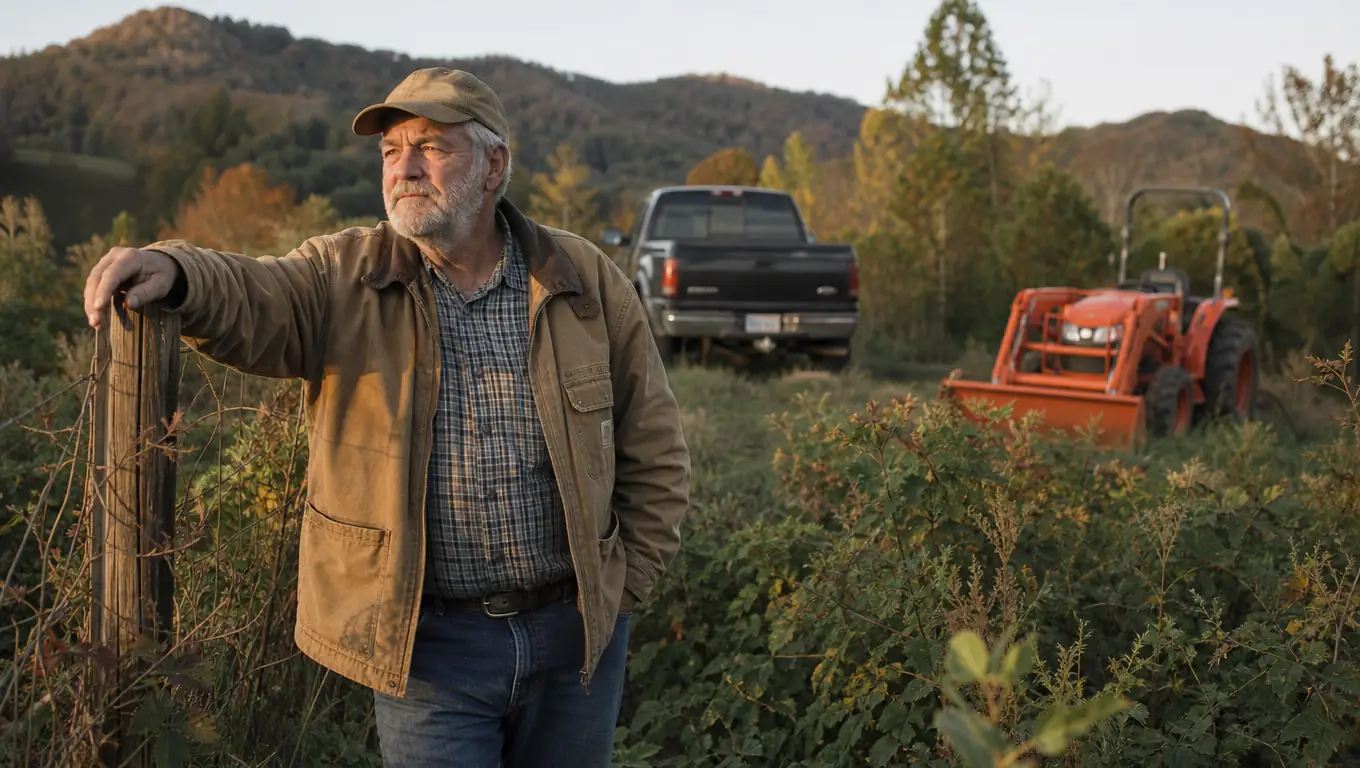
Two different products share the same shelf at the farm store, and they do two different jobs. One kills a stump and stops it from sprouting. The other feeds the rot that slowly turns the stump soft so you can burn it or knock it over. I have used both while clearing the 22 acres my wife Carol and I bought outside Crossville, Tennessee, and the short answer is this: Bonide Stump-Out is the bottle I reach for when I cut something down and want it to stay dead. The potassium nitrate stuff has its place, but it is a waiting game.
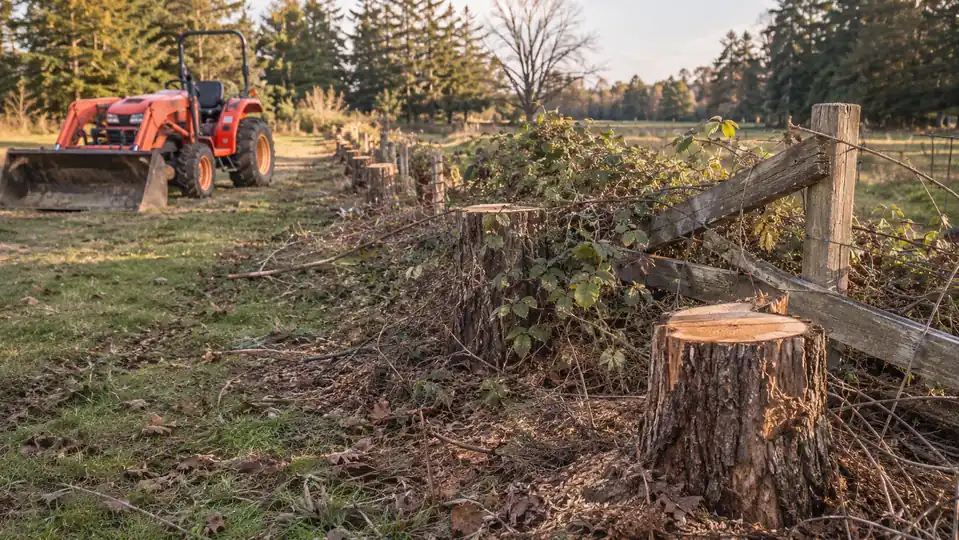
About six of our acres were nothing but privet, blackberry bramble, sweetgum saplings and old cedar running along a collapsed fence line when we bought the place in 2019. I have been working through it in sections ever since, mostly with a chainsaw and my compact tractor. Every section leaves the same question: what do I do with the stumps? Cut a sweetgum flat and it will send up a ring of sprouts by midsummer. Cut a cedar and the same thing happens, slower but just as sure. That is the problem Bonide Stump-Out solves, and it is worth understanding exactly how it differs from the potassium nitrate approach before you spend money on either.
| Bonide Stump-Out | Potassium Nitrate Stump Remover | |
|---|---|---|
| What it does | Kills the living stump and stops resprouting | Speeds up natural decay so the wood rots soft |
| How fast | Label says 1-6 weeks to kill weeds and stumps | Months, usually a full season or more |
| Stops sprouts | Yes, that is its main job on a fresh cut | No, it does not kill live tissue |
| Application | Spray undiluted on the cut, or mix for a hose-end or tank sprayer | Drill holes, pour in granules, keep them damp, repeat |
| Risk to plants you want to keep | It is a broadleaf herbicide, so drift can hurt garden plants | Stays in the stump, little to no drift |
| End result | A dead stump that still has to rot or be ground out | A soft, crumbly stump you can often burn or break apart |
How I Used Both on My Place
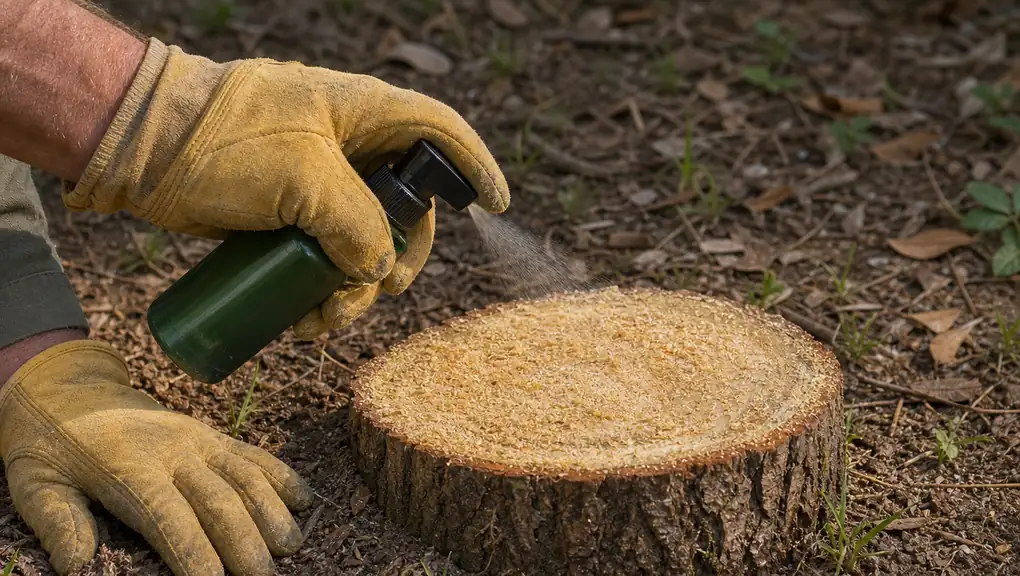
The fence line gave me a natural test. Where I cut cedar and sweetgum in the early spring, I treated the fresh cuts with Bonide Stump-Out right away, straight from the 8-ounce bottle with its applicator, just like the label says: use it undiluted to kill stumps and prevent sprouting. Where I had older stumps from the year before, ones that had already sprouted once and been cut again, I tried the potassium nitrate route. I drilled holes across the top of each stump, poured in the granules, and kept the tops damp through the summer.
The difference showed up by late summer. The stumps I treated with Bonide Stump-Out stayed quiet. No sprouts, no regrowth around the base, nothing. Carol noticed it before I did, walking the fence line one evening and pointing out which cuts I had treated and which ones I had left. The potassium nitrate stumps did soften, but slowly, and they still needed another season before I could knock them apart with the tractor bucket. Neither product made a stump disappear. One made the stump surrender, and the other made it rot. That distinction is the whole review, so let me break it down.
Where Bonide Stump-Out Wins
If your problem is a live stump that keeps coming back, Bonide Stump-Out is the right tool. Sweetgum is the worst offender on my place. Cut it and within weeks you have a ring of sprouts fighting for sunlight. The label says to use it undiluted to kill stumps and prevent sprouting, and that is exactly what it did for me. One application on a fresh cut, and I did not have to touch those stumps again. For a man who spent his working life on a county road crew watching regrowth fight back along every ditch and right-of-way, that kind of finality is worth a lot. It also means I am not spending a Saturday every spring cutting sprouts off the same stumps.
It also pulls double duty as a foliar spray, which matters when you are clearing a mixed mess like ours. The same 8-ounce bottle handles woody plants, vines and broadleaf weeds through a hose-end or tank sprayer, so the privet and blackberry bramble along the fence line get the same treatment as the stumps. The label says it works within 1-6 weeks, and in my experience the brush starts to brown out in about that window. When you are working through six acres in sections, that speed is the whole ballgame. You treat a section, you watch it die, and you move the tractor to the next one.
Where Potassium Nitrate Wins
I will give the potassium nitrate approach its due, because it wins on stumps that are already dead. An old stump that has been cut for a year is not going to resprout. What it needs is to go away, and that is where the rot-accelerating trick shines. Drill holes across the top, pour in the granules, keep them wet, and the wood turns soft and spongy over a season or two. On my place, that made an old cedar stump easy to break apart with the tractor bucket, something Bonide Stump-Out would never do on its own.
It also wins on safety around things you want to keep. Bonide Stump-Out is a broadleaf herbicide, so overspray or runoff near a garden, a row of ornamentals, or a neighbor's property line is a real concern. The potassium nitrate stays where you put it, in the stump. It does not drift in the wind, and it is not going to brown out the grass or the flower bed the way herbicide overspray can. If your stump sits right next to something you care about, that is a genuine point in its favor, and I would not pretend otherwise.
Bonide Stump-Out stopped my sweetgum stumps from sprouting in one season. The potassium nitrate made an old cedar stump rot soft, but it took a year to get there.
Cut it once and keep it dead
Bonide Stump-Out kills the stump and stops the sprouts, and the same bottle handles vines and brush through a hose-end or tank sprayer. It is the one I keep in the truck.
Amazon Check Today's Price on Amazon →Why Both Are Called Stump Remover
Here is the part that confuses people at the farm store. Both products are called stump remover, but one is a herbicide and the other is basically a fertilizer for rot. Bonide Stump-Out uses the active ingredient 3,5,6-Tricloro-2-Pyridinyloxyacetic Acid, and it works by killing the living tissue so the stump cannot send up sprouts. Potassium nitrate does not kill anything. It feeds the fungi that break wood down, so the stump rots from the inside out. Same end goal, completely different path, and the path determines which one you want.
That difference shows up in the timing and the end result. With Bonide Stump-Out, you see the win in weeks: the brush dies, the sprouts stop, and you move on. What you do not get is an empty hole. The dead stump is still there, and it will take years to rot on its own, or you grind it out when you are ready. With potassium nitrate, you wait a season or two, but when it is done, the stump is soft enough to burn or break apart. One product wins the battle, the other wins the cleanup. That is why I keep both on the shelf, and why I reach for the Bonide first.
What About Grinding or Burning?
The honest answer is that neither product replaces a stump grinder, and I rent one when a stump is in the way of something I am building. But for the back part of the property, where a stump is just sitting in the brush, chemicals are a whole lot cheaper than a rental and a whole lot easier than digging. Bonide Stump-Out handles the live ones, potassium nitrate handles the dead ones, and the grinder handles the ones I cannot wait on. That is the full picture, and anybody who tells you different is selling something.
Burning is the other option, and it pairs naturally with the potassium nitrate method. Once the wood has gone soft and spongy, a lot of folks build a small fire on top of the stump and let it burn down into the root ball. Check your local burn rules first, keep water nearby, and never walk away from it. I have burned a few that way and it works, but it is a slow, smoky process, not a bonfire. Set your expectations accordingly.
Who Should Buy Which
Buy Bonide Stump-Out if you are cutting live trees and brush and you are tired of fighting sprouts. That is most of the clearing work on my place, and it is probably most of yours. Sweetgum, cedar, privet, blackberry bramble, all of it responds to the same treatment. Buy the potassium nitrate if you have stumps that are already dead and you are willing to wait a season or two for them to rot soft enough to burn or knock over. It is the right tool for the back half of the job, the part where you are cleaning up stumps from last year instead of fighting new growth. And if you are buying for a cabin or a weekend place, where you are not there to keep after regrowth, that argument gets even stronger.
If you are doing both jobs, and most of us clearing acreage are, you will probably end up with both on the shelf. But if I had to tell a neighbor which one to buy first, it is the Bonide. A stump that keeps resprouting is a problem that comes back every single year. A stump that is slowly rotting is a problem that is solving itself. Spend your money on the problem that fights back.
A Few Things Worth Knowing Before You Spray
The 8-ounce bottle is a concentrate, so a little goes a long way. For a stump, apply it undiluted to the fresh cut, and do it right after you saw, while the wood is still open. For brush along a fence line, mix it according to the label and run it through a hose-end or tank sprayer. The label covers stumps, woody plants, vines and broadleaf weeds, and it is meant for outdoor use around homes, cabins, fences and walkways. That matches the jobs I use it for, and it should match yours.
One caution from a guy who spent his working life on a county road crew: read the label and respect it. This is a herbicide, not water. Do not spray on a windy day, do not let it drift onto garden plants, and keep it off your skin. The potassium nitrate route has its own caution. It is an oxidizer, so store it away from heat and flame, and check with your local fire marshal or county office before you burn a treated stump. Burning is the payoff for that method, but it is also where people get themselves in trouble.
Bottom line from a guy who has spent years cutting his own place: if the stump is alive, kill it with Bonide Stump-Out. If the stump is dead and you have patience, let the potassium nitrate do its slow work. Neither one is magic, and anybody who tells you different has not spent a summer on a tractor. But the Bonide is the one that stops the fight, and that is the fight most of us are in.
Start with the stump killer that actually stops sprouts
If you are cutting live stumps and fighting regrowth, Bonide Stump-Out is the bottle to grab. One application on a fresh cut and you are done with sweetgum sprouts for good.
Amazon See Today's Price on Amazon →