
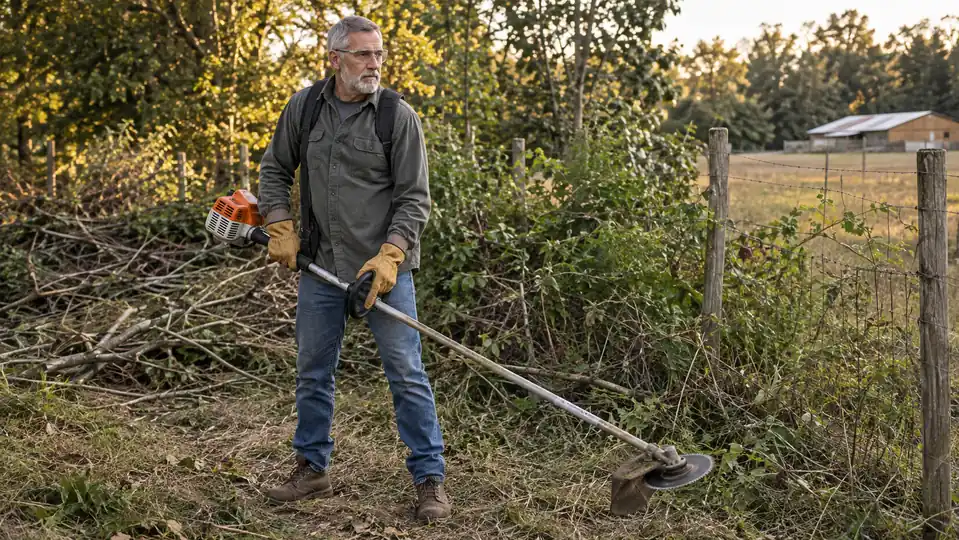
If you own a stretch of overgrown ground, you already know the feeling. You spend a Saturday with a string trimmer, and by noon the nylon line is half gone, the blackberry bramble is still winning, and the sweetgum saplings along the fence line look like they have not noticed you. I spent most of a summer in that exact spot on the 22 acres I bought outside Crossville, Tennessee, and I will tell you straight: string trimmer line is the wrong tool for woody growth. The CALPALMY Brush Cutter Blade and Adapter Kit is the fix I wish I had bolted on years earlier.
The short answer is that a steel brush blade and a spool of nylon line are not competing for the same job. String line is for grass and light weeds. A brush cutter blade is for saplings, privet, bramble and old cedar, the stuff that laughs at a trimmer. I ran the CALPALMY kit on my straight shaft trimmer through two full seasons of clearing, and it changed how I work. Here is the honest comparison, including the places where string line still wins, because there are a few.
| CALPALMY Brush Cutter Blade Kit | String Trimmer Line | |
|---|---|---|
| Best for | Saplings, privet, blackberry bramble, old cedar and woody brush along a fence line | Grass and light weeds around trees, posts and buildings |
| Cutting woody growth | Alloy steel teeth slice through 1-inch sweetgum saplings | Nylon line whips and shreds, bogs down on anything woody |
| Replacement cost over a season | One kit with three steel blades lasts for years if you keep it out of the dirt | A fresh spool is cheap and easy to keep on hand |
| Safety near rocks and gravel | Steel teeth can chip and throw fragments if you hit a rock | Line flexes and gives, less likely to throw hard debris |
| Setup | Two universal adapter sets with thrust washers, fits straight shaft trimmers with a 1-inch arbor, bolt it on once | Wind a spool in a few minutes, no tools |
| Tools it fits | Trimmers, weed eaters, chainsaws and brush cutters, except ECHO SRM series | Only the trimmer you bought it for |
| Longevity of the cutting edge | Three blades from 20 to 80 teeth, alloy steel, holds an edge through a season of clearing | Line wears, cracks and needs replacing as you go |
How I Tested This
I am not a reviewer by trade. I am a retired county road-crew foreman who got tired of looking at a fence line that kept winning. Before I put my name on anything, I run it the way I run everything on this place: on the actual ground that needs clearing. The worst stretch here is about 6 acres of privet, blackberry bramble, sweetgum saplings and old cedar along a collapsed fence line. That is where I tested the CALPALMY kit, on a straight shaft trimmer with a 1-inch arbor, the exact setup the kit is built for. I bought this place in 2019, and that fence line has been on my list since day one.
I started with the 9-inch, 20-tooth blade for the thickest bramble, then moved to the 9-inch, 36-tooth blade for general brush, and finished with the 10-inch, 80-tooth blade for the saplings. I kept a spool of heavy-duty string line on the same trimmer for comparison, switching back and forth so I could judge them on the same ground in the same afternoon. I also paid attention to what each one did to my back, my arms and my patience, because those matter more than any spec sheet.
What's in the CALPALMY Kit
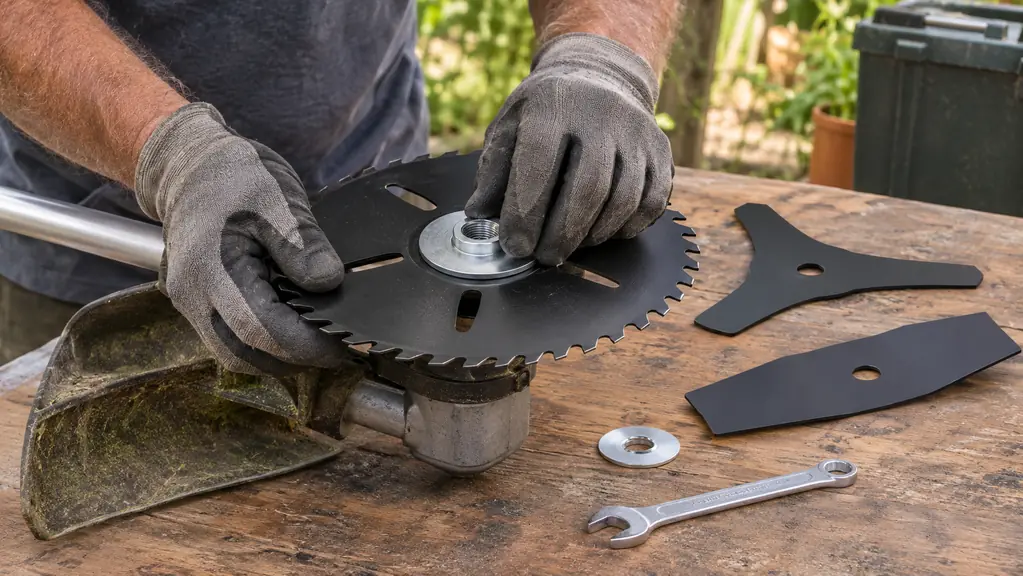
The kit is three circular blades: a 9-inch with 20 teeth, a 9-inch with 36 teeth, and a 10-inch with 80 teeth, all alloy steel. Along with the blades you get two universal adapter sets, including thrust washers, so the hardware fits straight shaft trimmers with a 1-inch arbor. The compatibility list covers trimmers, weed eaters, chainsaws and brush cutters, with one notable exception: the ECHO SRM series. If you own one of those, check your arbor before you order.
The 20-tooth blade is the workhorse for heavy bramble. The 36-tooth is the all-rounder, the one I left on the trimmer most days. The 80-tooth blade, with the fine teeth, is what I reached for on sweetgum saplings up to about an inch thick. The whole kit weighs 1.76 kilograms, which sounds like nothing until you hold it out at arm's length for an afternoon. Plan on a good harness or a strong shoulder, because the weight is out at the end of the shaft, not in your hands.
Mounting the Blades and Adapters
The first mount takes a little patience. You line up the blade on the arbor, seat the adapter and thrust washers, and tighten it down so there is no wobble. A loose blade is dangerous, so I check mine before every use. The kit includes two sets of universal fitment hardware, which matters if you plan to move the blades between a trimmer and a brush cutter. Once it is on, it stays on; I have not had a blade come loose on me in two seasons of use.
The exception is the ECHO SRM series. The compatibility list says trimmers, weed eaters, chainsaws and brush cutters, but it names that series as the one it does not fit. I do not own one, so I cannot test that fit myself, but I would not order this kit for an ECHO SRM without measuring the arbor first. That is the kind of thing I would tell a neighbor before he spent his money.
How the Kit Holds Up Over a Season
I ran this kit from early spring to late fall, which on my place means privet in the spring, bramble through the summer, and cedar and sweetgum in the fall. The 20-tooth blade took the worst of it and still cuts clean. The 36-tooth blade is the one I left on the trimmer most days, and it has not needed sharpening yet. The 80-tooth blade did the saplings and still has its edge.
The adapters are the part I expected to give me trouble, and they have not. The thrust washers seat the blade square, and the two sets of hardware mean I can leave one blade set up on the trimmer and keep another ready. I knock the sap off after every use and store the kit dry. That is the whole maintenance routine. If you treat it like a real tool instead of a disposable spool, it will act like one.
Where CALPALMY Wins
Steel wins everywhere the job is woody. A nylon line cannot cut a 1-inch sweetgum sapling; it just whips the bark and frays. The CALPALMY blade, with alloy steel teeth spinning at trimmer speed, slices through it in a pass or two. On privet and blackberry bramble, the difference is not subtle. The line tears and tangles, the blade chews through and keeps going. I cleared a section of fence line in one afternoon that had beaten me for two weekends with string.
Steel also wins on endurance. A spool of line wears down as you work, and you stop to advance or replace it constantly. The three blades in this kit held an edge through two full seasons of clearing on my place. You will still want to keep it out of the dirt and off rocks, but for cutting wood and vegetation, the blade is the better tool. And the kit covers you across tools: if you have a weed eater, a chainsaw or a brush cutter with the right arbor, the same blades and adapters can move between them. That is the kind of versatility a spool of line cannot match.

Where String Trimmer Line Wins
Now the part I promised you. String line wins around anything hard. When you are trimming grass next to a concrete foundation, a gravel drive or a line of fence posts, nylon gives and flexes where steel teeth will chip and throw fragments. I keep string on a trimmer for the edges of the yard and around the barn, and I do not feel bad about it. It is the right tool for that job, and using the right tool is half of doing good work.
String also wins on cost and simplicity. A fresh spool is cheap, and winding one takes a few minutes with no tools. The CALPALMY kit is a bigger upfront purchase, and mounting a blade with the adapter and thrust washers takes a little more care the first time. If your ground is mostly grass with a few weeds, string line is all you need. Spend the money on a good heavy-duty line and save the steel for the brush. There is no shame in that; it is just matching the tool to the job.
If You Are Clearing Saplings, Not Just Grass, Steel Beats String
The CALPALMY Brush Cutter Blade and Adapter Kit gives you three alloy steel blades and two universal adapter sets for a straight shaft trimmer with a 1-inch arbor. It is the setup I reach for on the brush line. Check today's price on Amazon and see if it fits your machine.
Amazon Check Today's Price on Amazon →Who Should Buy Which
Buy the CALPALMY kit if you own acreage with real brush on it. If you have privet, blackberry bramble, sweetgum saplings, old cedar, or any woody growth along a fence line, and you are the one clearing it, a steel blade will save you weekends. It is also the pick if you already own a straight shaft trimmer with a 1-inch arbor and want one kit that can also work on a weed eater, chainsaw or brush cutter, as long as it is not an ECHO SRM series.
Stay with string line if your property is mostly open ground with grass and light weeds. If you trim around trees, posts and buildings and rarely touch anything with bark, nylon is cheaper, faster to set up and safer near hard surfaces. And if your trimmer is an ECHO SRM series, check the arbor fit before you buy any blade kit. I would also tell a neighbor this: if you have never run a brush blade before, spend the first hour on open brush, not on a slope, until you get a feel for how it grabs.
One afternoon I took a 1-inch sweetgum sapling down in a single pass. The string line had been whipping that same tree all spring.
What I'd Tell a Neighbor Buying Their First Brush Blade
If you are new to brush blades, here is the honest version. The first time you bolt one on, it feels like the trimmer got mean. It vibrates more than string, it makes more noise, and it wants to pull. That is normal. Give yourself an hour on easy brush before you tackle the thick stuff. Keep both hands on the machine, work from the left side of the growth so the cut material clears, and do not reach across your body with it.
The other thing I would tell a neighbor is to buy the kit for the blades, not for the brand name. I do not get paid to say this. I bought the CALPALMY kit with my own money after reading the specs, and it has held up through two seasons of abuse. The 4.4-star rating across more than 1,200 reviews on Amazon matched my experience, which is not always the case. If the kit fits your arbor, it is a fair deal for what it does.
Safety Notes From a Retired Road Crew Foreman
I ran a county road crew for a lot of years, so I will say this plainly. A steel blade spinning at trimmer speed will cut what you point it at, including you if you are careless. Wear heavy pants, boots, eye protection and hearing protection. Clear the area of rocks, wire and anything a blade can throw. Keep the blade below knee height, and never use it on a ladder or in a position where a kick could put you off balance.
The other thing I learned is to respect the machine. A brush blade grabs harder than string, so hold the trimmer firmly and let the blade do the work. Do not force it into thick growth; work in passes. And when you are done, pull the blades off, knock the sap off them, and store them dry. Alloy steel holds an edge, but it will still rust if you leave it wet in the bed of the truck overnight.
When the Line Stops Cutting, This Is the Kit I Reach For
Three alloy steel blades, two universal adapter sets, and a straight shaft trimmer with a 1-inch arbor. That is the whole setup. See the current price of the CALPALMY Brush Cutter Blade and Adapter Kit on Amazon.
Amazon Check Today's Price on Amazon →