
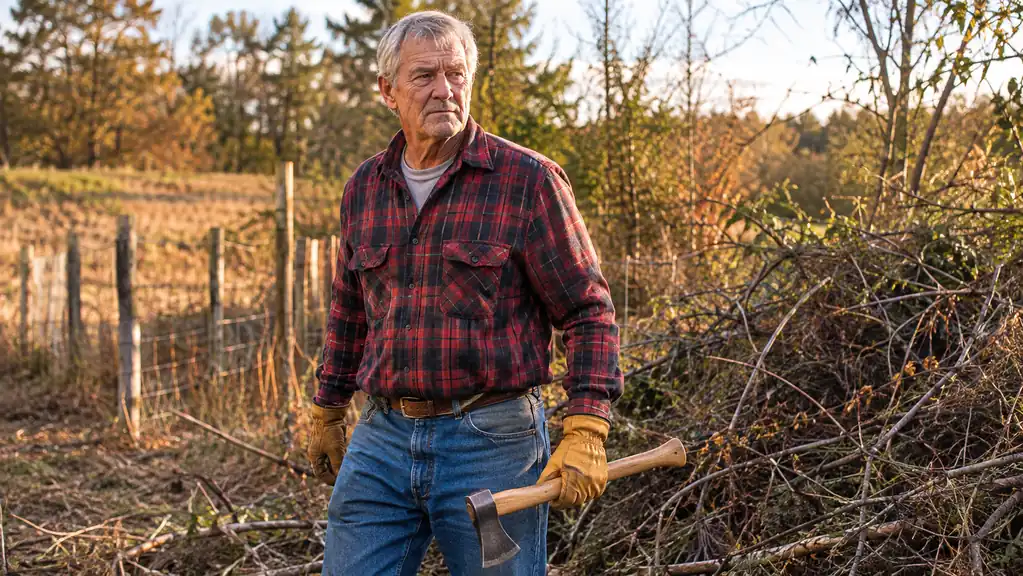
I spent thirty years on a county road crew, and I have cut more brush than I care to count. When I bought 22 acres outside Crossville, Tennessee, in 2019, about six of them were so thick with privet, blackberry bramble and sweetgum saplings that you could not walk through them. The fence line along the back of the property had collapsed under the weight of old cedar and honeysuckle, and the first time I walked it I lost sight of the posts entirely. I tried a machete first, because that is what everyone tells you to grab. I will tell you plainly: the Fiskars Brush Axe does the same job in about a third of the swings, and it is the tool I reach for every time I head down the fence line now.
Here are ten reasons it earned a permanent spot in my land-clearing kit.
The Brush Axe That Cleared My Fence Line
If you are fighting bramble and saplings by hand, this is the tool I would buy first. Check today's price on Amazon and see why it replaced my machete.
Amazon Check Today's Price on Amazon →The Curved 10-Inch Blade Cuts on the Pull, Not Just the Chop
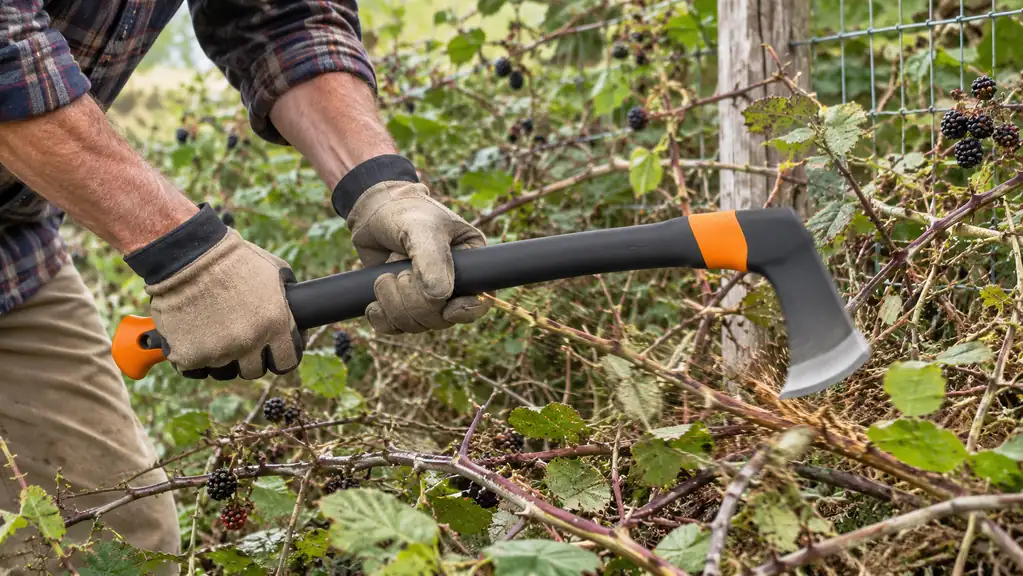
The first thing I noticed was the curve. A straight machete blade wants you to swing hard and follow through, and in thick blackberry bramble that means you are constantly fighting the vines on the backswing. The curved blade on the Fiskars Brush Axe catches growth on the pull, so you can work vines and bramble with a shorter, more controlled motion. The first afternoon I used it, I cleared a stretch of fence line near the old gate that I had been avoiding for weeks. That matters when you are leaning into a blackberry thicket for an afternoon.
A 19-Inch FiberComp Handle Keeps the Weight Down
The whole tool weighs 1.2 pounds, which is lighter than a lot of machetes I have carried. A heavy blade wears on your wrist by the second hour, and at my age that is the difference between a productive afternoon and a sore one. With the Fiskars, I can clear a section of fence line, stop for water, and go back at it without my forearm screaming. The fiberglass handle is tough and does not splinter like a wooden one can. I have had wooden handles crack on me in the Tennessee humidity, and I have not had a single issue with this one.
It Takes Down Saplings a Machete Just Bounces Off
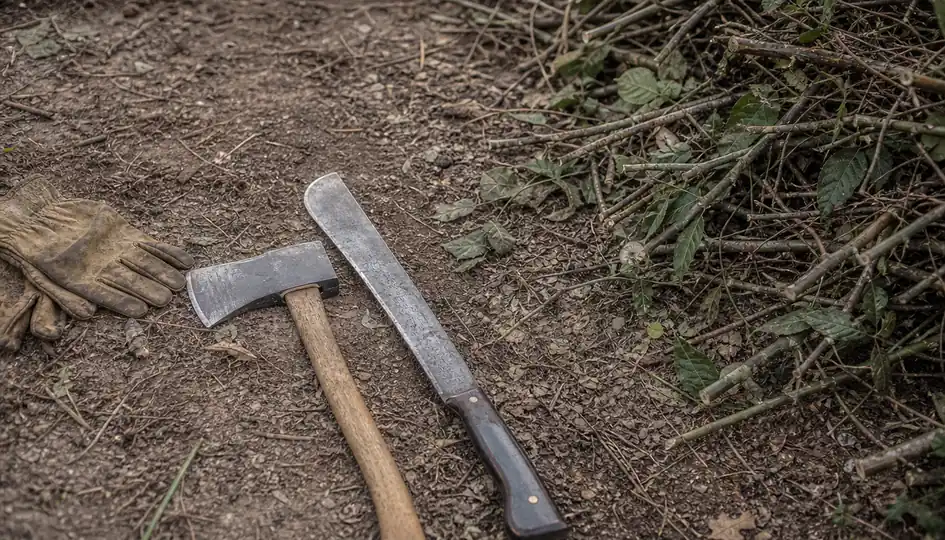
A machete will hit a one-inch sweetgum sapling all day and leave it standing. I know because I spent a Saturday morning doing exactly that along the east boundary, and by noon I had a pile of bruised bark and a row of saplings still standing. The Fiskars Brush Axe, with its felling head and sharp edge, goes through the same sapling in a few solid swings. That single difference changed how I work: I no longer carry a separate saw for the little stuff, and I do not dread the sapling patches the way I used to.
The Low-Friction Coating Means Fewer Stuck Blades
Green bramble is wet and grabby, and a dry blade binds halfway through a cut. The low-friction coating on the Fiskars blade helps it glide through instead of sticking, which matters more than you think. When you are swinging at head height in a thicket, a blade that sticks is a blade that wastes your energy and puts you off balance. I have caught myself on a stuck blade more times than I like to admit with other tools. With this one, the cut goes through clean and the swing stays smooth.
The Insert-Molded Blade Does Not Loosen
Cheaper tools develop a wobble where the blade meets the handle. I had a cheap brush cutter years ago that got so loose I could feel the blade shift on every swing, and it eventually threw the blade entirely. The Fiskars blade is insert-molded into the handle, so there is no joint to work loose. After three seasons of hard use on my place, clearing bramble, saplings and cedar scrub, mine is still as solid as the day it arrived. I check it out of habit before I start, and I have not found anything to complain about.
It Clears Trails Faster Than Anything I Have Used by Hand
When I cut a trail through the overgrown part of my property last spring, I took the Fiskars Brush Axe and worked in a rhythm: swing, step, swing. The trail runs about two hundred yards from the house to the back fence line, and I cleared it in a single long Saturday. The blade clears a wider path per swing than a machete, so the trail went in maybe twice as fast. That is the difference between a weekend job and a day job, and it is why I reach for the brush axe when a job has an actual end point.
It Strips Logs and Clears Around Stumps
The blade is sharp enough to strip bark and small branches off a downed log, which makes it useful after the cutting is done. I have also used it to clean out around cedar stumps before I bring the tractor in, knocking the dirt and roots off so I can get the bucket under them. A machete can do some of this, but the extra heft of the brush axe makes the work quicker and the blade holds its edge longer.
The Safety Sheath Makes It Easy to Carry
The Fiskars comes with a safety sheath, so I can carry it in the truck bed or hang it in the shed without worrying about it banging around. That sounds like a small thing until you have had a bare machete blade sliding around behind the seat, which is how I put a gash in a gas can one trip. The sheath covers the edge completely, and it clips on and off without a fight.
The Full Lifetime Warranty Covers the Work
Fiskars backs this brush axe with a full lifetime warranty. When a tool is going to live in the truck and get used hard, that kind of coverage matters. I have only used it once on another Fiskars tool, an old pair of Fiskars pruning shears I wore out after years of use, and the process was painless. No receipt arguments, no runaround, just a replacement. That is the kind of company behavior that keeps me buying the same brand.
It Is the Tool I Reach for First, Every Time
The real test of a tool is whether you grab it when you head out the door. Mine hangs by the back door, and it is the first thing I pick up for bramble, saplings, trail cutting and fence-line work. The machete stays in the shed now. For my money, the Fiskars Brush Axe is the better tool for this job, and it is the one I would buy again.
What I'd Skip
If you are clearing acres of mature timber or digging out stumps, skip the brush axe. That is tractor and chainsaw work, and no hand tool is going to make it fun. I rented a forestry mulcher for the worst of my cedar thicket and it did in an afternoon what I could not have done by hand in a month. I would also skip it if you want a tool for trimming around the flower beds; a pair of loppers is lighter and easier to control. And if you are set on a machete because that is what you know, I am not going to talk you out of it. But for bramble, saplings and brush lines, the Fiskars Brush Axe is the tool I would pick every time.
A machete will hit a one-inch sweetgum sapling all day and leave it standing. The Fiskars Brush Axe goes through it in a few solid swings.
Ready to Clear Your Own Fence Line?
The Fiskars Brush Axe replaced my machete for good. Check today's price on Amazon and see if it earns a spot in your kit.
Amazon Check Today's Price on Amazon →