
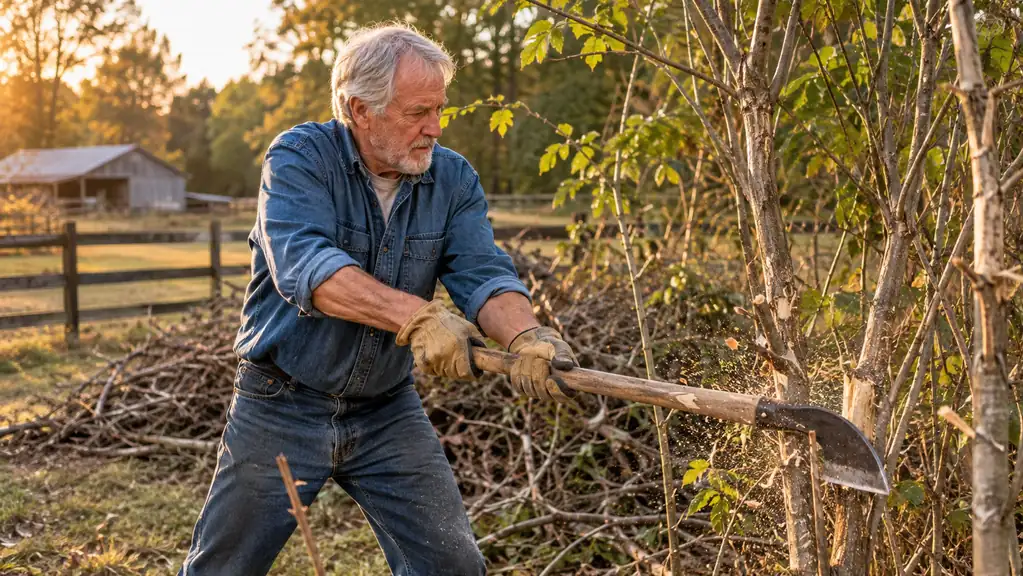
Standing in a patch of blackberry bramble that had swallowed a hundred feet of fence line, I finally understood why the old-timers kept both a machete and an axe in the back of the truck. The machete was fine for the soft stuff. The moment I hit a sweetgum sapling, it just bounced. I picked up the Fiskars Brush Axe in the spring of 2023, after a few seasons of clearing this place taught me that neither tool alone was quite right. Three years and a lot of swings later, here is the short answer: if you are clearing real brush, saplings and overgrown fence lines, the Fiskars wins. If your work is mostly grass, vines and light weeds, a basic machete is lighter in the hand and easier on the arm.
I've got 22 acres outside Crossville, Tennessee, about six of them gone to privet, blackberry bramble, sweetgum saplings and old cedar along a collapsed fence line. I bought the place in 2019 and I've been clearing it in sections ever since. I have a compact utility tractor and a pickup, but no forestry mulcher and no skid steer. That means the close work between the fence posts gets done with hand tools, and I've put enough hours in with both a machete and the Fiskars to have a strong opinion. I want to be clear about what this comparison is not. It is not a lab test and it is not a spec sheet shootout. This is one retired road-crew foreman, a patch of overgrown Tennessee ground, and two tools that both claim to solve the same problem. I used both until I had an opinion, and then I used them a little more to make sure the opinion was right.
| Fiskars Brush Axe | Basic Machete | |
|---|---|---|
| Best for | Chopping saplings, privet, bramble and small trees with a weighted swing | Slashing grass, vines and soft brush with a sweeping cut |
| Blade | 10-inch curved stainless steel blade on a 19-inch FiberComp handle | Usually 18 to 24 inches of straight or lightly curved steel |
| Chopping power | Weighted head and curved edge bite deep into wood in one swing | Light blade needs repeated swings on anything woody |
| Handle | Insert-molded fiberglass handle that will not loosen or split | Often wood or plastic, quality varies a lot by brand |
| Carry weight | 1.2 pounds, with the weight in the head where it helps the chop | Similar total weight, but balanced for swinging, not chopping |
| Warranty | Full lifetime warranty | Usually none, or a short one |
| Sheath | Safety sheath included in the box | Often a thin nylon sleeve that wears through |
What the Spec Sheet Says
Before I get into the dirt, here is what Fiskars actually lists for the brush axe. The blade is a 10-inch curved stainless steel edge on a 19-inch FiberComp handle, and the whole tool weighs 1.2 pounds. The blade has a low-friction coating that helps it glide through wood, and the handle is insert-molded, which is a fancy way of saying the blade and handle are fused together so the head cannot loosen. It comes with a safety sheath and a full lifetime warranty. Those are the facts. Everything else in this article is what those facts feel like after a few hundred swings.
Where the Fiskars Brush Axe Wins
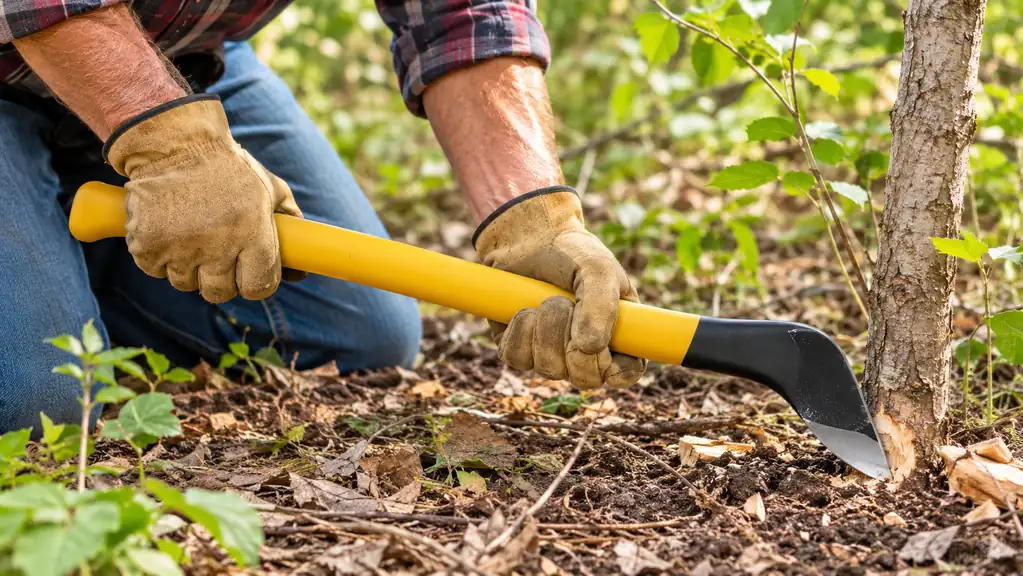
The Fiskars wins the only test that matters on my place: it cuts wood. The 10-inch curved blade is stainless steel with a low-friction coating, and the 19-inch FiberComp handle puts your hands where they get leverage without making the tool awkward. At 1.2 pounds it is not a heavy tool, but the weight sits in the head, so the blade does the work. On a two-inch sweetgum sapling, one solid swing goes through. On privet and cedar, it feels almost unfair. The insert-molded blade is fused into the handle, so there is no joint to loosen, no head to fly off, no handle to split. That matters when you are two hundred feet from the truck and the tool is all you have.
The other place the Fiskars wins is the stuff that does not show up in the spec sheet. The chopping motion keeps the blade moving down and away from your legs, which is not something you can say about a long machete swing. It comes with a safety sheath, so it rides in the truck without eating a hole in the bed liner. And Fiskars backs it with a full lifetime warranty. I have never had to use the warranty, but for a hand tool that lives outside and works for a living, that is a real answer to the question nobody asks until something breaks.
The listing also mentions stripping logs and felling small trees, and both of those are true. I have used the curved blade to skin bark off cedar posts and to notch a sapling before the chainsaw came out. It is not a full-size axe and it will not replace one, but for the small stuff that makes up most of the work on an overgrown property, it does the job a full-size axe does without the weight.
Where a Basic Machete Wins
I am not going to pretend the machete does not have a place, because it does. The long blade, usually 18 to 24 inches, reaches the ground without you bending over, which is a bigger deal than it sounds after an hour of work. For grass, briars and soft vines, a machete clears ground faster than the Fiskars because you are making a wide sweep instead of a chopping stroke. On the open parts of my fence line, where the problem was mostly blackberry runners and tall grass, the machete was the right tool and the Fiskars was overkill.
A basic machete is also easier on the arm for light work. The blade is thin and the swing is long, so you are moving less steel through less resistance. It is usually the cheaper tool to replace if you lose it in the weeds or loan it to a neighbor who does not bring it back. And if you are hiking a trail or keeping a path open, the machete rides easier on a pack. None of that makes it the better tool for clearing land. It makes it the better tool for a narrower job.
There is also a learning curve difference. A machete swing is a full-body motion, and if you have not grown up with one, the blade can get away from you. The long reach that makes it good for grass also puts the edge closer to your shins, your helper and anything else in the arc. The Fiskars chops in a shorter, more controlled arc. For a first-time landowner, that controlled arc is worth something.
The machete bounced off the sweetgum. The Fiskars went through it in one swing. That is the whole comparison in one afternoon.
How I've Used Both on My Place
The section of fence line I cleared first ran about three hundred feet along the back of the property. The privet was head-high, the blackberry bramble was woven through it like wire, and every few feet there was a sweetgum sapling that had gotten a start. I started with the machete because it was what I had. I spent a morning whipping through the bramble and made good time until I hit the first sapling. The blade bounced. I hit it again. It bounced again. I ended up on my knees with a handsaw, and I remember thinking there had to be a better way.
The Fiskars Brush Axe showed up a few days later, and I used it on that same fence line the following weekend. The difference was not subtle. The curved blade caught the sapling at the base and went through in one swing. Privet that had laughed at the machete folded over in two or three cuts. By mid-morning I had a pile big enough to need the tractor to drag it to the burn pile. Carol came out to see what all the noise was about and ended up hauling brush for an hour. That is the kind of tool it is. It changes the math on a job you have been putting off.
To be fair about the limits: the Fiskars is not a replacement for a chainsaw, and I am not going to pretend it is. On anything over three or four inches at the base, I reach for the saw or the tractor. And for a full day of nothing but grass and weeds, the machete is the better tool. But the work that was actually eating my weekends, the privet, the bramble, the saplings, the cedar, that is Fiskars country. The tool earns its spot in the truck.
The brush axe that cleared my fence line
The Fiskars 19-inch Brush Axe with the 10-inch curved blade is the hand tool I reach for first on woody brush. It comes with a safety sheath and a full lifetime warranty. Check today's price on Amazon and read the full specs before you decide.
Amazon Check Today's Price on Amazon →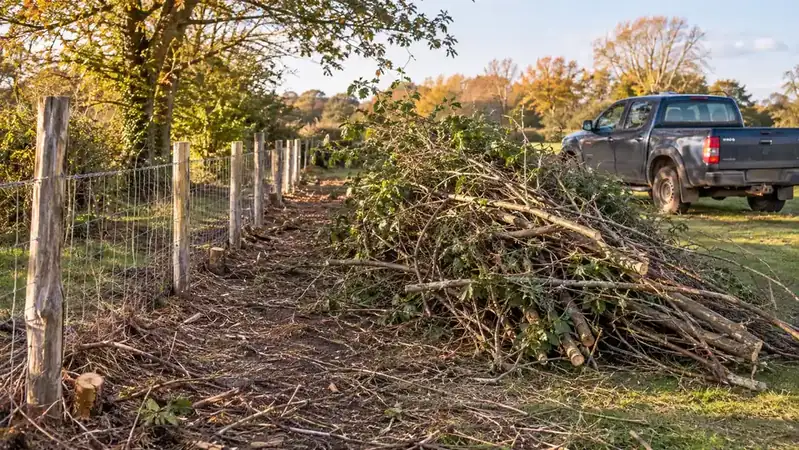
Who Should Buy Which
Buy the Fiskars Brush Axe if your land looks like mine. If you have saplings coming up along the fence line, privet taking over the ditch, blackberry bramble swallowing the gate, or old cedar that needs cutting back, this is the tool that makes that work go fast. It suits a landowner in their forties, fifties or sixties who still wants to do the work themselves but does not want to fight the tool. The short handle and the chopping motion are easier on the back than a long machete swing, and the lifetime warranty takes the risk out of the purchase.
Buy a basic machete if your work is mostly grass, weeds and soft vines, or if you want something light to carry on a trail. If you are keeping a path open through a pasture or cutting back ditch weeds a couple of times a year, a machete is enough and it costs less. And if you already own one, keep it. The two tools do not compete as much as they cover for each other. But if you are only going to buy one tool for clearing overgrown ground, and you have any woody brush at all, buy the Fiskars. The machete will sit in the truck. The Fiskars will be in your hand.
The Bottom Line
If you have been going back and forth on this the way I did, here is the bottom line. The Fiskars Brush Axe is the better tool for clearing land, and it is not close. The machete is the better tool for a narrower set of jobs that are mostly grass and vines. Buy the Fiskars first. If the grass work starts to wear on you, add a machete later. That order has served me well for three seasons on this place, and I do not see it changing.
What I'd Tell a Neighbor
If a neighbor asked me whether to buy a brush axe or a machete, I would tell them what I tell everyone who comes to look at the place. Start with the Fiskars. Learn the swing on the soft stuff, keep the sheath on it when it is not in your hand, and wear gloves and eye protection because the blade is sharp and the brush fights back. Then, if you find yourself doing a lot of grass and vine work, pick up a cheap machete for the light days. That is not a fancy system. It is just what actually worked on twenty-two acres in Tennessee.
If your land looks like mine, start here
The Fiskars Brush Axe has a 10-inch curved stainless steel blade, a 19-inch FiberComp handle, a safety sheath and a full lifetime warranty. Check today's price on Amazon to see current availability.
Amazon Check Today's Price on Amazon →